A historic wave of IPOs is about to hit Wall Street. SpaceX $SPACEX, Anthropic $ANTHROPIC, and OpenAI $OPENAI, companies once confined to private markets and tech lore, are racing to go public with valuations that could redefine the market. For the average investor watching from the sidelines, the frenzy can feel alien, driven by a complex mix of technological promise and sheer fear of missing out (FOMO).
To cut through the noise, BBTW’s Peter Green spoke with Troy Hooper, cohead of equity capital markets Americas at business intelligence firm MergerMarket.
Our conversation came just before Goldman Sachs’ $GS rationale for SpaceX’s $1.78 trillion valuation was made public: Goldman sees SpaceX’s AI revenue rising 100x by 2030, to $322 billion by 2030 from $3.2 billion in 2025. SpaceX’s total revenue is expected to reach $474 billion in 2030 from $18.7billion last year.
(This interview has been condensed and edited for clarity and brevity )
Peter Green: We’re facing massive IPOs from SpaceX, Anthropic, and OpenAI amid economic uncertainty, high inflation, and geopolitical turmoil. How do you explain this disconnect to ordinary investors? What is really going on?
Troy Hooper: There is enormous capital that constantly moves in finance, both in public and private markets. What happens on Main Street does not reflect Wall Street; they are often two completely different universes. These deals are all being driven by AI. AI is a watershed moment in our civilization. Companies are trying to be the leader in that race. You have startups like Anthropic, OpenAI, and SpaceX to some degree trying to win. Then you have giants like Alphabet $GOOGL Microsoft $MSFT and Oracle $ORCL in a race to be the winner. The publicly traded tech giants have the money to burn. Even without this innovation cycle, they constantly do research and development. But this is a moment where the technology has become enticing. They are making these investments to try to lead that market.
Green: Can these companies achieve the revenue to justify trillion-dollar valuations? SpaceX’s revenue is a fraction of its target valuation.
Hooper: Those two examples [Tesla $TSLA and SpaceX] are completely detached from reality. That’s the Elon Musk factor. Tesla has always been about the vision; they’ve sold themselves as a tech company. With SpaceX, you have to buy into the vision Musk is peddling. When you look at the financials and balance sheets, they don’t justify the valuations Tesla currently has or that SpaceX aims for in its IPO.
Does that same “vision over financials” logic apply to Anthropic and OpenAI? And how long can shares stay aloft on just an idea?
Anthropic and OpenAI are a little more rooted in reality. The valuations, while certainly high, are not unrealistic like SpaceX and Tesla have been. The opportunity to make money in AI is certainly there. Look at the ‘neo-cloud’ companies who buy NVIDIA $NVDA chips and rent them out to hyperscalers like Microsoft $MSFT. Some were created just a year or two ago and are already generating billions in revenue. Even SpaceX, in its S-1 (IPO filing document), revealed a leasing agreement where it rents surplus chips to Anthropic for a vast sum. That is very similar to what these neo-clouds do.
Is there enough cash in the market to absorb all three IPOs?
That’s the multi-trillion dollar question. We’ll find out. They will have to space them out. You can’t have them all at once. Some big institutions will have to sell other stocks to make room. That could have a knock-on effect on the entire Nasdaq or S&P 500. We could see other stocks sell off to make room for these.
Would those sold-off stocks then become bargains?
Maybe. It depends on how much they sell off and whether their business fundamentals remain consistent. That’s hard to know.
That sell-off could hurt many individual investors.
It absolutely could. There’s a risk there.
Let’s game the sequence. SpaceX goes first but is the most volatile. What happens if early investors cash out after lock-up periods and the price falls? How would that affect the subsequent Anthropic and OpenAI IPOs?
It depends on if it’s a mild disappointment or a catastrophe. If SpaceX were to flop, it wouldn’t necessarily doom the others entirely, but it would apply more pressure. It could force them to delay their listings or reduce their valuation expectations.
We’re in a strange macro environment: high interest rates, stagnant housing, an energy crunch. How do these factors affect such massive IPOs?
There are a lot of moving pieces. Interest rates seem high now, but they’re historically normal. Once capital becomes more expensive, budgets tighten. Investors will have to consider all these variables.
Is a major driver simply FOMO? More money is now in ETFs than individual stocks [approximately 53% to 47%]. Is there an irrational thirst here?
Absolutely. Some of it’s by design. SpaceX is structuring its deal to include about 30% retail. They’ve convinced NASDAQ to change rules to allow them to join index funds earlier. When you have average people asking if they should buy the SpaceX IPO, that’s FOMO.
What about the circularity critique? NVIDIA invests $5 billion in OpenAI, which then buys $5 billion of NVIDIA chips. It looks like revenue, but is there real end-user demand?
I think so. There’s also a question of how sustainable the demand is. Uber came out recently and said they weren’t getting the expected results from their AI capital expenditures. We might start seeing large businesses pull back on AI spend. That could cascade down and change the forecasts of AI infrastructure companies.
Skeptics like Michael Burry call this a bubble, citing governance, unrealistic P/E ratios, the energy crunch, and a lack of use cases. What’s your response?
There are definitely signs we’re in a bubble. A lot of the things we’ve talked about. Even the fact that Alphabet is doing an $80 billion equity raise, its first meaningful one in close to 20 years, is a sign. You issue shares when you can get the most money for them. There are elements of a bubble. But even if we are, it doesn’t mean it will pop tomorrow. Sometimes these things keep inflating for years.
If these IPOs are successful, will we see more gazillion-dollar listings?
If they’re all successful, it’ll go on. But the party usually stops at some point. AI is still in the early days. There’s a lot more that needs to play out before we know exactly how powerful and profitable it is.
—Peter S. Green
Big Businesses Mentioned This Week
$SPACEX ( ▼ 3.86% ) $ANTHROPIC ( ▲ 0.84% ) $OPENAI ( ▼ 2.51% ) $GS ( ▲ 5.0% ) $GOOGL ( ▲ 3.32% ) $MSFT ( ▼ 0.04% ) $ORCL ( ▲ 3.24% ) $TSLA ( ▼ 1.15% ) $NVDA ( ▲ 2.5% ) $BZG23 ( 0.0% ) $BRK.A ( ▲ 0.14% ) $TMHC ( ▲ 0.07% ) $BX ( ▲ 8.01% ) $GME ( ▲ 1.76% ) $PSKY ( ▲ 2.25% ) $IAC ( ▲ 2.23% ) $MGM ( ▼ 0.78% ) $VOO ( ▲ 0.5% ) $UBER ( ▲ 0.31% ) $BTC ( ▼ 2.35% ) $MSTR ( ▲ 2.44% ) $UAA ( ▲ 1.19% ) $JPM ( ▲ 3.5% )
War Story
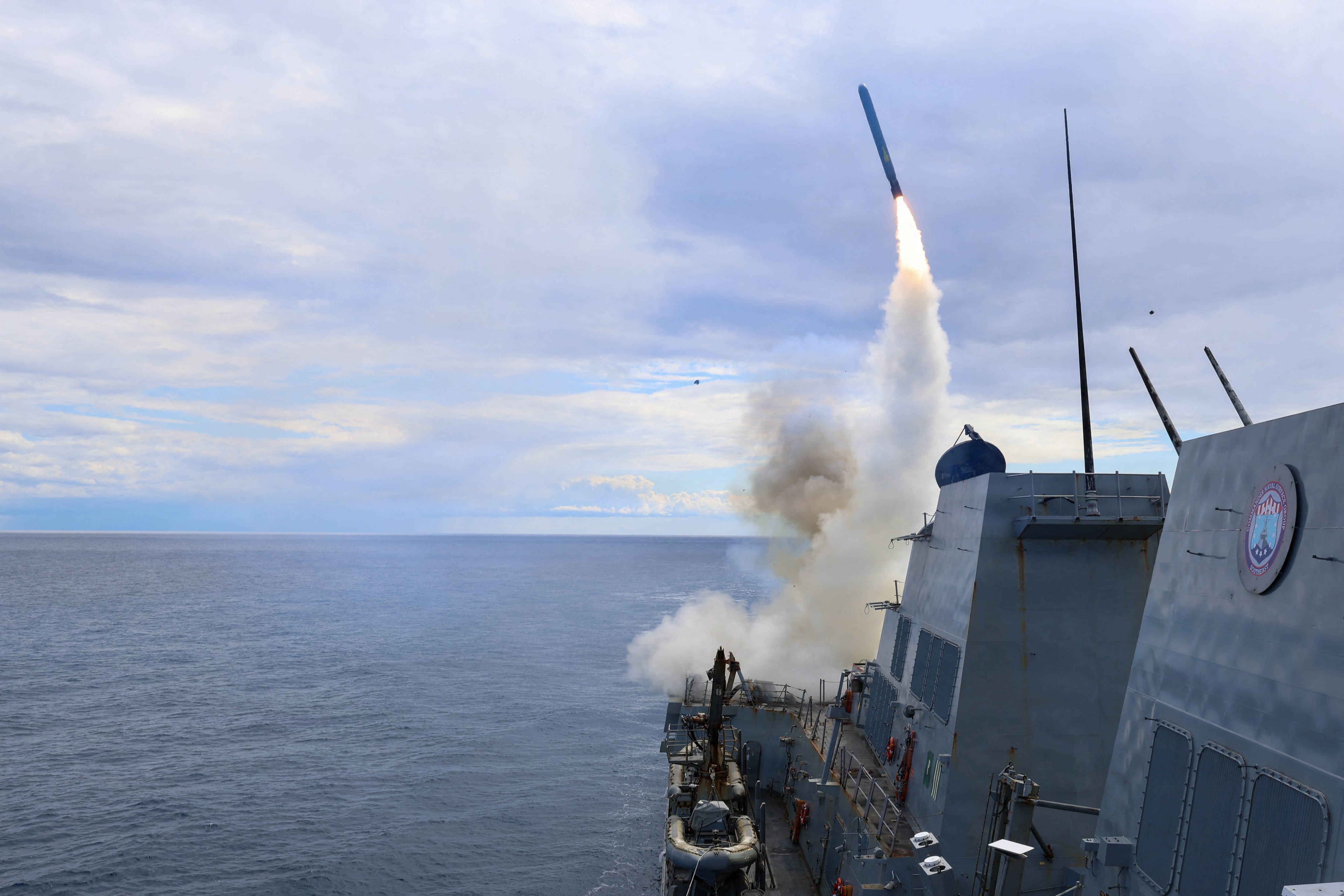
- It’s expensive waging war, and not just for buying weapons and fixing the wreckage they leave behind. Moody’s Analytics says the war on Iran has cost the U.S. $100 billion, or about $750 per household, mostly from higher prices for gas and the knock-on effect on food, transportation, shelter and everything else. Until now, says chief economist Mark Zandi, deficit-financed tax cuts have cushioned the blow for middle- and lower-income families. But that ended May 16, by his calculation. “Unless the war ends soon and energy prices come down, they will have little choice but to rein in their spending, weighing further on the already sagging economy,” warned Zandi.
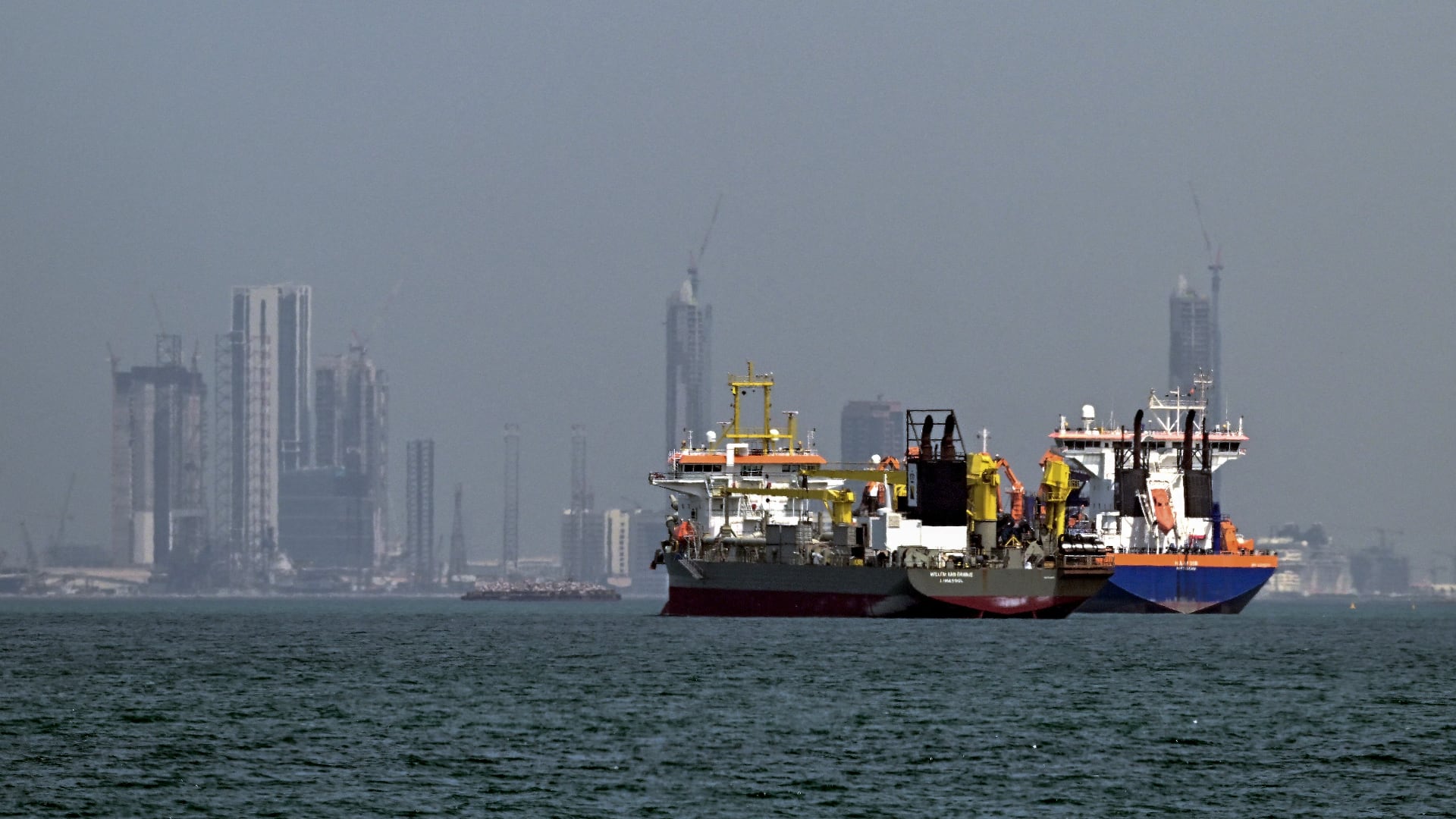
- So what’s going on with oil? And why isn’t it yet at $150 a barrel (Brent crude $BZG23 hit a 3-month low of about $86 a barrel on Thursday)? That’s largely because of two things, says economist Douglas Eakin: The drawdown of billions of barrels of oil in storage tanks and floating in tanker ships, and Beijing taking to heart President Trump’s threats early in the year to attack Iran. When the bombs dropped in February, China had been stockpiling Russian crude for months. While some ships are getting out of the Gulf, either by paying off the Iranians or under U.S. guidance, Gulf nations are planning a pipeline to bypass the Strait. A partial deal on letting oil tankers pass through the Strait may happen soon, says business intelligence service Kpler, noting that Iran’s exports have dropped from nearly 2 million barrels a day to just 300,000 since Iran’s blockade and the U.S. blockade of the blockade began in April. Even with a deal, traffic won’t be back to normal until September or October at the earliest, says Kpler. And that could be enough to savage global growth, which for now is riding more on hopes than reality. “The market settled into a delusional expectation that it’s all going to end soon, with a stroke of Donald Trump’s pen. All of that trapped oil is going to flow,’” energy analyst Rob McNally of Rapidan Energy Group told the Financial Times. A more likely scenario, says McNally, is that without new oil on the market, prices could jump in July or August close to $200 a barrel, forcing “the most gruesome and unpleasant form of demand curtailment and a broader economic downturn.”
What do you think of Big Business This Week? Tell us how you really feel in this survey!
The Usual Suspects
- WWWD: For decades savvy investors have been asking themselves “what would Warren Buffett do? In January, Buffett retired after more than half a century as chairman of Berkshire Hathaway $BRK.A, leaving the now $1 trillion holding company sitting on a $400 billion pile of cash, and his successor, Greg Abel, in the spotlight. Now Abel has made his first move: He paid $6.8 billion to acquire homebuilder Taylor Morrison $TMHC, placing a bet on homebuilding will recover despite high interest rates, and spent $10 billion shares in Google $GOOGL, Berkshire’s first AI play. Since its birth Berkshire has been guided by legendary stock picker Benjamin Graham’s value investing principle: forget FOMO and only buy bargains, and then hold them for a long time. Check back in a few years, then, to see how Abel is doing.
- Nervous investors: Investor fears that the $2 trillion market in private credit loans may be in trouble hit home again this week, when Blackstone $BX, the world’s largest private investment group, said it’s restricting withdrawals from its $45 billion flagship private credit fund, known as Bcred. Redemption requests hit $4.5 billion, or 10% of the fund’s assets, in the second quarter, the FT reported. Many of the business software companies that boomed over the past decade, along with rollups of medical practices have been financed by private credit, and AI, inflation and high interest rates have rattled the private credit business model, imperiling the very survival of many software firms.
- GameStop gets Serious: GamesStop $GME, the one-time meme stock that cost short sellers more than $20 billion in 2021 and 2024, is back. Profits rose in the past quarter to $389.6 million up from $44.8 million a year earlier. And the company has agreed to buy back $2 billion worth of stock to boost its share price. That could eat into the cash available for CEO Ryan Cohen audacious $56 billion bid for eBay, which at this point is presumed by most market-watchers to be DOA. GameStock’s market cap is only $10 billion, and eBay’s board has rejected the offer outright. The firm’s shares are down more than 26% in the past year, though they jumped more than 8% on the profit report.
- What’s old is new: Barry Diller, the 84-year old media mogul and takeover artist behind the 1980’s revival of Paramount $PSKY and more recently Interactive Corp $IAC and the Daily Beast, says IAC, which is about to be renamed People Inc. (it acquired the former DotDash-Meredith, which owned People magazine) plans to buy the 74% of MGM Resorts $MGM it doesn’t already own, for more than $13 billion, including debt. Why go from media to entertainment? Alongside People Inc.’s digital media assets, MGM Resorts represents a “perfect hedge in a world that is changing so unpredictively fast,” Diller wrote in an April letter to shareholders. “MGM owns 40% of the Las Vegas Strip—an entertainment nucleus that simply cannot be replicated anywhere in the world,” he added.
- Vanguard in the lead: In a sign of the growing power of Exchange Traded Funds (ETFs), low-fee investment manager Vanguard’s S&P 500 ETF, $VOO, has become the first ETF to hold over $1 trillion in assets, having quadrupled in size since 2022. “As investors chase the AI boom, ETFs have become an ultimate vehicle for US equity exposure,” Todd Rosenbluth, head of research at TMX VettaFi, told the Financial Times.
- You gotta pay the fare: Is money getting tight at Uber? This week Uber $UBER announced the layoff of several hundred people from its HR and recruiting department, and put a cap on employees’ usage of AI, after the company used up its 2026 AI budget before the end of April. Uber shares are down 19% in the past six months. Meanwhile more states are coming after the ride share companies. After Massachusetts last month said ride share drivers could unionize, Colorado is cracking down on safety in Ubers, Lyfts and other ride shares, requiring the companies to ensure riders can opt in to video and audio recording during rides, and mandating semi-annual background checks for drivers.
- Bitcoin’s burst bubble: There it goes again: Bitcoin $BTC, the mercurial cryptocurrency, has lost half its value since last October’s alltime peak over $122,000, falling below $63,000 this week. It seems all that excitement about ETFs being able to buy and hold cryptocurrency did not materialize after all, and some analysts say it could drop to as low as $50,000, as asset managers dump bitcoin to raise cash to buy the next shiny object: the SpaceX IPO. Another reason behind the drop: Strategy $MSTR, the firm that created the idea of Bitcoin-holding companies as their own asset class, sold Bitcoin for the first time since 2022. While it only sold about $2.5 million worth of tokens, it managed to spook the entire cryptocurrency market, which is known for moving on the tea leaves and entrails of celebrity traders.
- Step(h)ing up his game: Steph Curry, arguably basketball’s greatest active player, has signed pro sports’ biggest endorsement deal yet with a Chinese athletic wear maker, inking a 10-year, $400 million contract with Li-Ning, a company founded in 1990 by China’s Olympic gold-winning gymnast Li Ning. Curry ditched struggling UnderArmor $UAA last year. Chinese brands are facing an increasingly competitive market at home, and Li-Ning says it will open brick and mortar Curry stores in the U.S. Curry said he liked the brand’s shoes. But Li-Ning products were banned from the U.S. in 2022, after the U.S. government said it used forced labor in its factories. Rep. Chris Smith, a New Jersey Republican on the Congressional-Executive Commission on China, said he’ll ask the Department of Homeland Security to examine the deal. “The NBA, its players, and sites like Amazon cannot suggest that they stand for social justice at home while cashing checks from companies tied to the Chinese Communist Party’s forced-labor economy,” he told ESPN.
Tech Tales
- The Great Big Data Center Wait: A concatenation of problems have formed into a seemingly irresistible force delaying the construction of the massive data centers that AI companies need to train their systems and host the servers that will do all that deep-thinking stuff that AI is supposed to do for us. An analysis by JPMorgan $JPM found that 60% of the data-center capacity expected to be online in 2027 just won’t be ready. Backlogs in the supply chain, delays in getting building permits, a shortage of electric power to run the chips and of water to cool them, and growing opposition from neighbors are all raising questions that clearly have yet to be priced into AI’s business case. Google parent Alphabet $GOOGL just sold $10 billion in shares to Berkshire Hathaway $BRK.A, and plans to raise another $70 billion this year. Its shares fell 3.9% on the news Tuesday, and it lost $340 billion of market cap this week, raising questions about the near-term viability of its AI expansion. Unlike the big money-losing AI startups, Google usually can borrow the money it needs without selling off shares in the company. “The fact that they had to raise equity really makes you wonder about the intensity of the capex needs over the next couple of years,” analyst Michael Nathanson of MoffettNathanson told the Wall Street Journal.
- Data centers also have a big problem with community opposition, and one PR firm has a fix: Do a better job of selling yourselves. A survey for PR firm Hahn, which works with utilities around the country, found that only 23% of consumers say they feel comfortable living within a 10-mile radius of a data center, and “anti-data center sentiment is boiling over.” As a company rep said in an email this week, communities “see data centers as faceless, nameless strip miners [that] land, extract resources, exhaust what’s around them, and leave, while distant billionaires get richer and locals are left holding higher electricity bills.” One reason for the perception could, of course, be that it’s close to the reality. Good luck fixing both!
Media Mirror
- Star-crossed: The battle between Politico founder Robert Allbritton and right-wing New York Sun publisher Dov Efune over who gets to call their new Washington news org “The Star” got a time-out this week after a federal judge ruled that Efune, who bought the rights to the name in 2024, could press forward with his “Washington Star,” while Allbritton has to wait for a ruling on whether he can rename his news organization to “The Star.” Allbritton’s father, Joseph, was the last publisher of the defunct DC newspaper “The Washington Star.” Both men are hoping to capitalize on Jeff Bezos’ massive cuts at the Washington Post to capture its readership.
- There’s more turmoil at Paramount’s $PSKY CBS News, where right-wing boss Bari Weiss installed a former graphic designer as head of the venerable (and profitable) “60 Minutes” investigative show, the top rated news show in television, then promptly fired three of its top reporters including Scott Pelley. The show’s ratings are up although the channel’s evening news show has slumped to third place, with barely 4 million viewers under Weiss’ direction, behind NBC with 6.1 million and ABC with 8.2 million. Shares in Paramount are down 21% this year. CBS was forced to deny rumors Joe Rogan was being considered for a “60 Minutes” story on Thursday, but not before the satirists got in on the story on social media.
Media Mirror
- Star-crossed: The battle between Politico founder Robert Allbritton and right-wing New York Sun publisher Dov Efune over who gets to call their new Washington news org “The Star” got a time-out this week after a federal judge ruled that Efune, who bought the rights to the name in 2024, could press forward with his “Washington Star,” while Allbritton has to wait for a ruling on whether he can rename his news organization to “The Star.” Allbritton’s father, Joseph, was the last publisher of the defunct DC newspaper “The Washington Star.” Both men are hoping to capitalize on Jeff Bezos’ massive cuts at the Washington Post to capture its readership.
- There’s more turmoil at Paramount’s $PSKY CBS News, where right-wing boss Bari Weiss installed a former graphic designer as head of the venerable (and profitable) “60 Minutes” investigative show, the top rated news show in television, then promptly fired three of its top reporters including Scott Pelley. The show’s ratings are up although the channel’s evening news show has slumped to third place, with barely 4 million viewers under Weiss’ direction, behind NBC with 6.1 million and ABC with 8.2 million. Shares in Paramount are down 21% this year. CBS was forced to deny rumors Joe Rogan was being considered for a “60 Minutes” story on Thursday, but not before the satirists got in on the story on social media.
Get Big Business This Week in your inbox every week—and read it before everybody else! Sign up today.
Trumplandia
- Tariff troubles. Remember back in February when the Supreme Court struck down most of the tariffs, saying only Congress had the power to levy taxes? The Trump Administration was supposed to give back about $166 billion to importers who’d been forced to pay the extra duties. We all knew it was unlikely that retailers and consumers would get back anything to compensate for higher costs, but now the Administration says it’s not planning to hand back all the money, and its been stalling in the courts. By law, the tariffs must be repaid with interest, so the government is racking up a bigger bill by the day. Unless of course, it never pays. Some 330,000 importers paid tariffs on some 53 million bundles of goods entering the country, and the government now says it might only pay back $127 billion. And even for that cash, it’s insisting that each importer file its own lawsuit. While the Administration says it has paid back $21 billion so far, it’s just announced new tariffs on key trading partners, including a 25% tariff on brazil, and and new tariff on 10% to 12.5% on 59 countries and the European Union, alleging they’ve failed to crack down on the use of forced labor.
Want more Cheddar?
You’re clearly into smart people talking about even smarter things. Lucky for you, that’s literally our whole deal at Cheddar. We interview the brightest minds in business, finance, and tech. If you’d like more in-depth analysis from interesting people, lcheck out our where to watch page and turn us on 24/7! Your wallet will thank you and so, more importantly, will your mind. But also your wallet. Remember that.
Peter S. Green is a veteran reporter and editor who has spent more than two decades covering business and finance from Eastern Europe to New York City, and has worked for Bloomberg News, The New York Post, The New York Times and The Messenger. He lives in New York City and is always looking for the next big story.