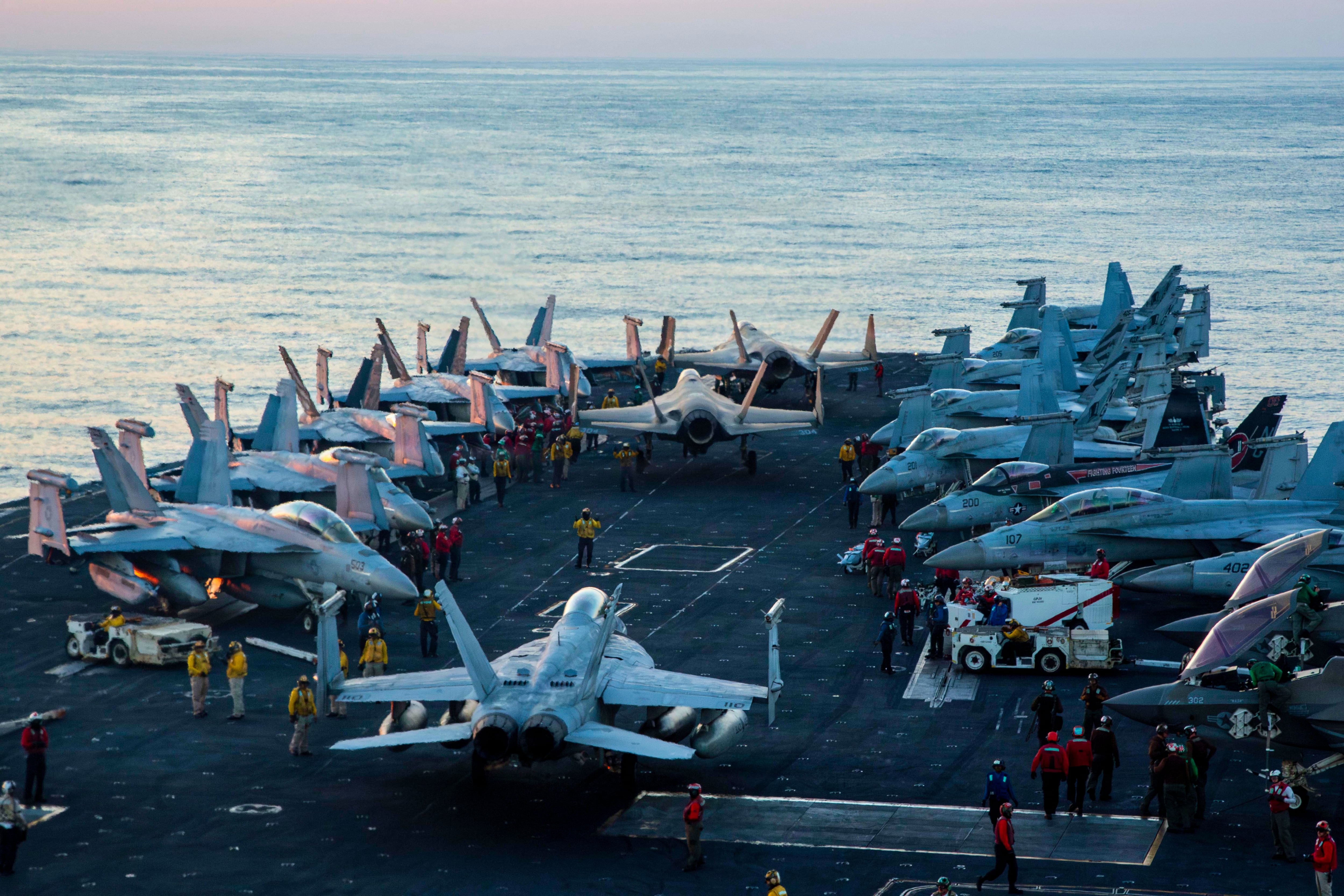
The ripple effects of the Iran War go beyond oil tankers and the Strait of Hormuz, affecting global supply chains for everything from semiconductor components to ice cream. To understand how these disruptions are playing out in real time, BBTW columnist Peter Green spoke with Razat Guarav, CEO of Kinaxis $KXS.TSX whose platform helps companies manage more than $200 billion in inventory across global supply chains. (This interview has been condensed and edited for clarity).
For readers who may not know Kinaxis, what do you do, and how does that give you visibility into what’s happening now?
“We are a global leader in helping provide a platform for supply chain planning and decision making. We work across seven verticals with companies like Unilever $UL and Ford Motor $F and Merck $MRK and Qualcomm $QCOM. We help them with forecasting their demand, planning their supplies, planning their inventories, planning their production, and we’ve got a platform that understands the physics of the supply chain and how the different elements are interrelated.”
When people think of the Middle East, they think oil. What are they missing?
“The Strait of Hormuz controls roughly 20% of the world’s oil, but also a lot of the liquid natural gas supply. Qatar supplies more than 20% of the world’s LNG, and a lot of that goes through the Strait of Hormuz. And then the Middle East has some important air cargo hubs: Dubai, Abu Dhabi and Doha. It’s not just passenger movements, but also air cargo. So that impacts flows between Asia and Europe, not just to the Middle East.
What are some less obvious goods being disrupted?
“The Gulf region is one of the world’s largest suppliers of sulfur that goes into fertilizers, and a lot of the silicone that goes into chip making comes from the Middle East. Then there are some items like dates and Dubai chocolates. There’s a lot of water supply that goes in on tankers into the Middle East that has been impacted as well. And ice cream.”
Ice cream? What does that tell us about modern supply chains?
“We’ve got customers in the food and beverage industry. They make ice cream in Turkey and then ship to Saudi Arabia or the UAE, frozen in temperature controlled containers. Summer is around the corner in the Middle East, and there’s a high correlation to demand for ice cream with changing temperatures. That has been disrupted.”
How are companies responding in real time?
“Since the war started, we’ve seen a 30-35% increase in the number of scenarios being run on our platform. Some of our customers are moving things not through the ports in the Middle East, but around into ports in Africa and then going around the Cape [of Good Hope]. That extends the lead times and it also adds costs: transportation, logistics costs, inventory, carrying costs.”
How much inventory cushion do companies really have?
“It varies by industry. If you’re talking about perishable food products, they have very short buffer inventory because they’re perishable. In automotive just-in-time inventory, you’re dealing with two to three days all the way up to maybe a week and a half, at most. You don’t want to carry too much inventory.”
How does this disruption compare to COVID or the Red Sea crisis?
“It’s definitely not as widespread as COVID, when the entire world was on lockdown. This is impacting product flows in and out of the Middle East so it’s a more regional conflict, but it’s more chronic than the Red Sea issue.”
If this conflict isn’t resolved soon, what changes permanently?
“No one is clear around how long things are going to last. Organizations are looking for alternatives, substitute sources of supply, rerouting things. This has led them to rethink their product flows and be a lot more deliberate about looking for optionality.”
So this could become a lasting structural shift, not just a temporary disruption?
“I think this is going to have a longer impact than just the end of the war, in terms of how product flows organize themselves. People are going to be de-risking choke points that have been exposed.”
—Peter S. Green
Big businesses mentioned this week
Peter S. Green is a veteran reporter and editor who has spent more than two decades covering business and finance from Eastern Europe to New York City, and has worked for Bloomberg News, The New York Post, The New York Times and The Messenger. He lives in New York City and is always looking for the next big story.