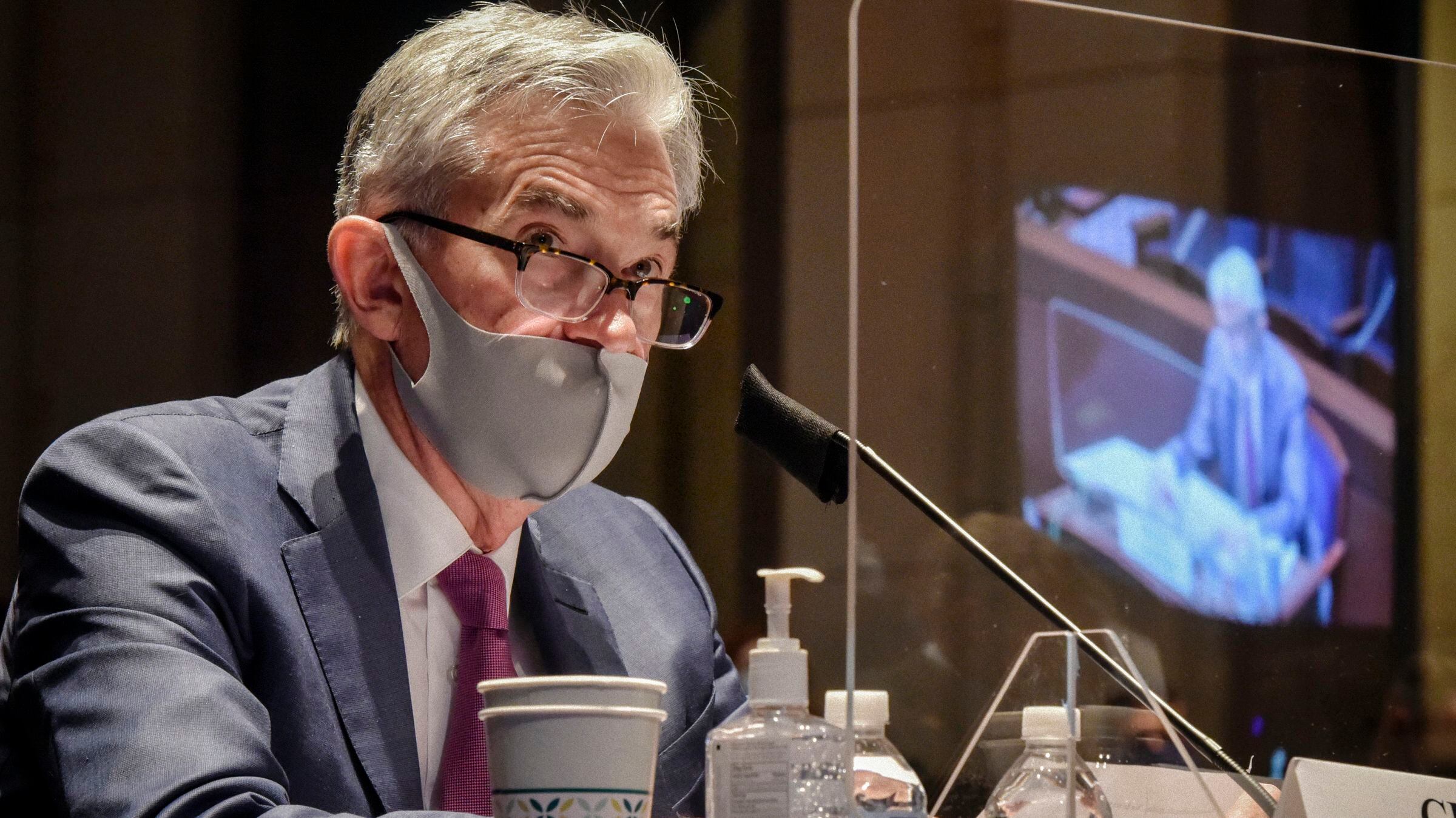
In this June 30, 2020, file photo Federal Reserve Board Chairman Jerome Powell, reflected in the sneeze guard set up between himself and members of the House Committee on Financial Services, speaks during a hearing on oversight of the Treasury Department and Federal Reserve pandemic response on Capitol Hill in Washington. The Federal Reserve adjusted its inflation target to seek price increases above 2% annually, a move that will likely keep interest rates low for years to come. The Fed on Wednesday, Sept. 16, also left its benchmark short-term rate unchanged at nearly zero, where it has been since the pandemic intensified in March. (Bill O'Leary/The Washington Post via AP, Pool)
By Christopher Rugaber
The Federal Reserve adjusted its inflation target to seek price increases above 2 percent annually, a move that will likely keep interest rates low for years to come.
The Fed on Wednesday also left its benchmark short-term rate unchanged at nearly zero, where it has been since the pandemic intensified in March. Fed officials also indicated in a set of economic projections that they expect the rate to stay there at least through 2023.
The Fed's benchmark interest rate influences borrowing costs for homebuyers, credit card users, and businesses.
The Fed's statement says that because inflation has mostly fallen below its target of 2 percent in recent years, Fed policymakers now "will aim to achieve inflation moderately above 2 percent for some time." It also says it will keep rates low until inflation averages 2 percent over an unspecified period.
The change is significant for the central bank because it means that Fed officials will accept higher inflation to make up for its previous shortfalls below 2 percent. Previously, the Fed has ignored such shortfalls.
Fed chair Jerome Powell first said last month that the Fed would seek inflation above 2 percent over time, rather than just keeping it as a static goal.
The change reflects a growing concern at the Fed that in recessions, inflation often falls far below 2 percent, but it doesn't necessarily reach 2 percent when the economy is expanding. Over time, that means inflation on average falls further from the target. As businesses and consumers come to expect increasingly lower inflation, they act in ways that entrench slower price gains.
The Fed prefers a little inflation because that gives the central bank more room to cut or raise short-term interest rates.
Spain's government has fined Airbnb 64 million euros or $75 million for advertising unlicensed tourist rentals. The consumer rights ministry announced the fine on Monday. The ministry stated that many listings lacked proper license numbers or included incorrect information. The move is part of Spain's ongoing efforts to regulate short-term rental companies amid a housing affordability crisis especially in popular urban areas. The ministry ordered Airbnb in May to remove around 65,000 listings for similar violations. The government's consumer rights minister emphasized the impact on families struggling with housing. Airbnb said it plans to challenge the fine in court.
Roomba maker iRobot has filed for Chapter 11 bankruptcy protection, but says that it doesn’t expect any disruptions to devices as the more than 30-year-old company is taken private under a restructuring process. iRobot said that it is being acquired by Picea through a court-supervised process. Picea is the company's primary contract manufacturer. The Bedford, Massachusetts-based anticipates completing the prepackaged chapter 11 process by February.
Serbia’s prosecutor for organized crime has charged a government minister and three others with abuse of position and falsifying of documents related to a luxury real estate project linked to U.S. President Donald Trump’s son-in-law Jared Kushner. The charges came on Monday. The investigation centers on a controversy over a a bombed-out military complex in central Belgrade that was a protected cultural heritage zone but that is facing redevelopment as a luxury compound by a company linked to Kushner. The $500 million proposal to build a high-rise hotel, offices and shops at the site has met fierce opposition from experts at home and abroad. Selakovic and others allegedly illegally lifted the protection status for the site by falsifying documentation.
Wealthfront’s CFO Alan Iberman talks the $2.05B IPO and the major moment for robo banking as the company bets on AI, automation, and “self-driving money."


