Updated 11:32 pm ET
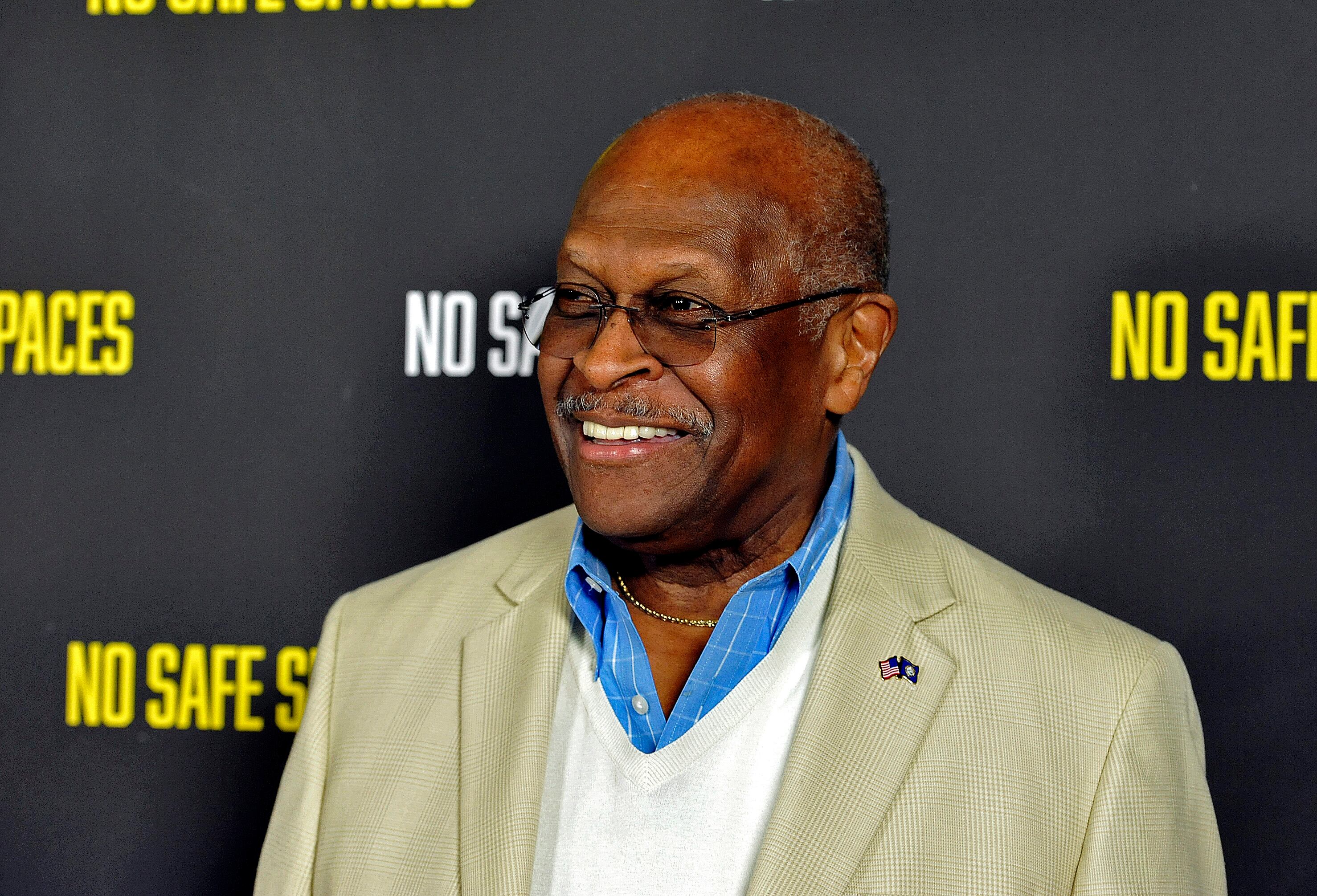
Herman Cain, former Republican presidential candidate and former CEO of a major pizza chain who went on to become an ardent supporter of President Donald Trump, has died of complications from the coronavirus. He was 74.
A post on Cain's Twitter account on Thursday announced the death. Cain had been ill with the virus for several weeks. It's not clear when or where he was infected, but he was hospitalized less than two weeks after attending Trump's campaign rally in Tulsa, Oklahoma, in June. Cain had been co-chair of Black Voices for Trump.
"We knew when he was first hospitalized with COVID-19 that this was going to be a rough fight," read an article posted on the Twitter account. "He had trouble breathing and was taken to the hospital by ambulance. We all prayed that the initial meds they gave him would get his breathing back to normal, but it became clear pretty quickly that he was in for a battle."
Cain, who had hoped to become the first Black to win the GOP nomination, was initially considered a long-shot candidate. His bid was propelled forward in September 2011 when he won a straw poll vote in Florida, instantly becoming an alternative candidate for Republican voters concerned that former Massachusetts Gov. Mitt Romney was not conservative enough.
But he struggled to respond to accusations that he had sexually harassed several women and — in a video that went viral on the Internet — rambled uncomfortably when asked whether he supported or opposed President Barack Obama's policies in Libya. There were also gaffes on abortion and torture that led Cain's critics to question whether he was ready for the White House.
The centerpiece of Cain's campaign was his 9-9-9 plan, which would have replaced the current tax code with a 9 percent tax on personal and corporate income and a 9 percent national sales tax. Cain said the plan's simplicity would stimulate the economy by giving investors certainty. A Baptist preacher who made money giving motivational speeches, Cain had a talent for selling his ideas to conservative audiences with a straightforward style.
"If 10 percent is good enough for God, 9 percent ought to be good enough for the federal government," he told crowds.
President Donald Trump has signed an executive order to block states from regulating artificial intelligence. He argues that heavy regulations could stifle the industry, especially given competition from China. Trump says the U.S. needs a unified approach to AI regulation to avoid complications from state-by-state rules. The order directs the administration to draw up a list of problematic regulations for the Attorney General to challenge. States with laws could lose access to broadband funding, according to the text of the order. Some states have already passed AI laws focusing on transparency and limiting data collection.
The New York Times and President Donald Trump are fighting again. The news outlet said Wednesday it won't be deterred by Trump's “false and inflammatory language” from writing about the 79-year-old president's health. The Times has done a handful of stories on that topic recently, including an opinion column that said Trump is “starting to give President Joe Biden vibes.” In a Truth Social post, Trump said it might be treasonous for outlets like the Times to do “FAKE” reports about his health and "we should do something about it.” The Republican president already has a pending lawsuit against the newspaper for its past reports on his finances.
President Donald Trump says he will allow Nvidia to sell its H200 computer chip used in the development of artificial intelligence to “approved customers” in China. Trump said Monday on his social media site that he had informed China’s leader Xi Jinping and “President Xi responded positively!” There had been concerns about allowing advanced computer chips into China as it could help them to compete against the U.S. in building out AI capabilities. But there has also been a desire to develop the AI ecosystem with American companies such as chipmaker Nvidia.
House Republicans in key battleground districts are working to contain the political fallout expected when thousands of their constituents face higher bills for health insurance coverage obtained through the Affordable Care Act. For a critical sliver of the GOP majority, the impending expiration of the enhanced premium tax credits after Dec. 31 could be a major political liability as they potentially face midterm headwinds in a 2026 election critical to President Donald Trump’s agenda. For Democrats, the party’s strategy for capturing the House majority revolves around pinning higher bills for groceries, health insurance and utilities on Republicans.
President Donald Trump says a deal struck by Netflix last week to buy Warner Bros. Discovery “could be a problem” because of the size of the combined market share. The Republican president says he will be involved in the decision about whether federal regulators should approve the deal. Trump commented Sunday when he was asked about the deal as he walked the red carpet at the Kennedy Center Honors. The $72 billion deal would bring together two of the biggest players in television and film and potentially reshape the entertainment industry.
The two-sentence footnote raised serious concerns about accuracy and credibility.
Load More