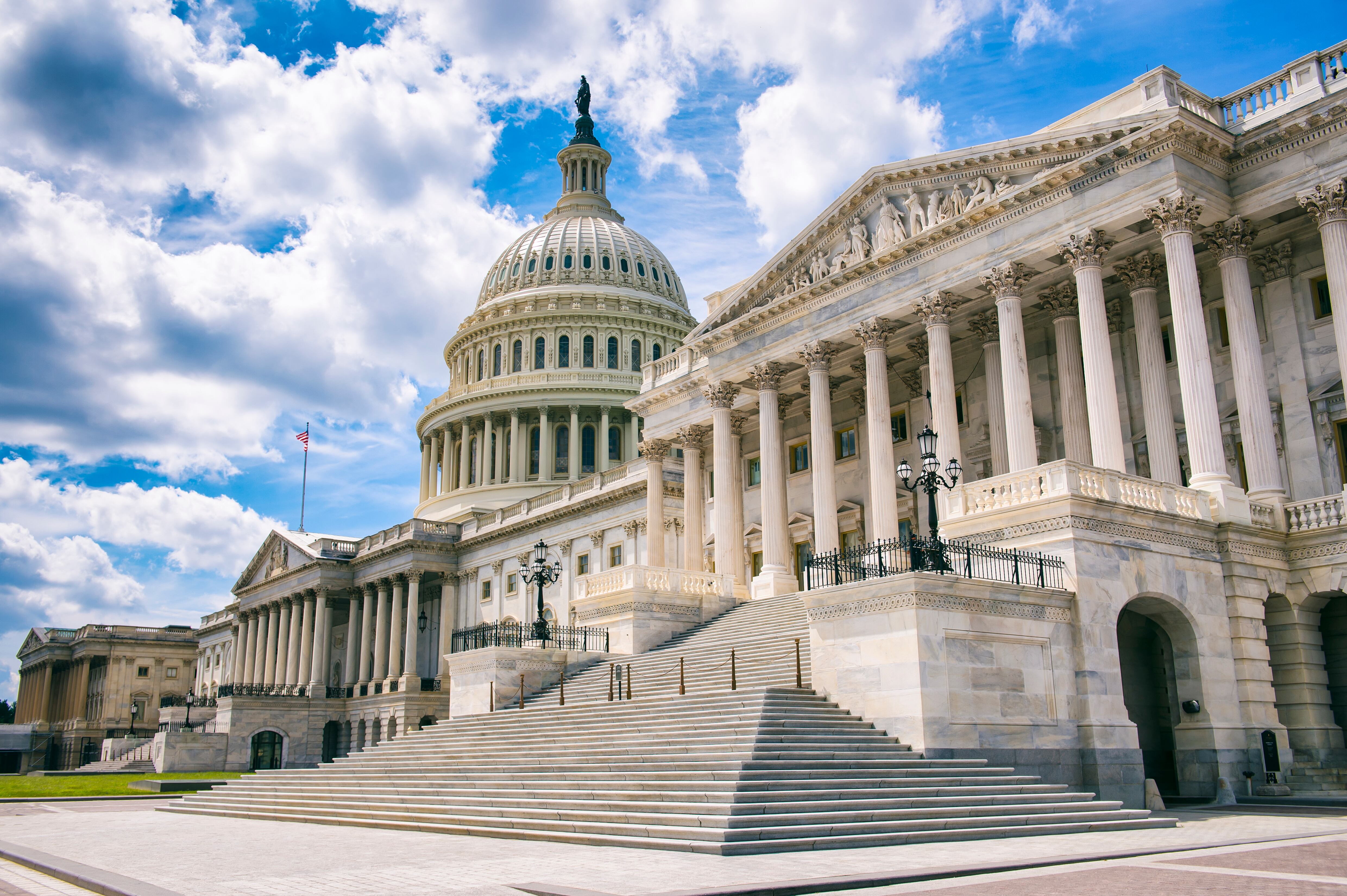
On a historic day in America, political players on Capitol Hill are moving slowly and divisively after approving rules for impeachment debate. The body is now beginning six hours of partisan debate time before this historic impeachment vote.
Lawmakers just finished debating the rules that will be used to consider the impeachment charges against President Donald Trump after Democrats defeated two objections raised by Republicans. The House adopted debate rules, voting twice after Republicans raised a motion to reconsider. The vote on the rules for the debate passed 228 to 197, signaling that few lawmakers plan to defect parties, and now representatives will move to those six hours of debate about the articles, themselves. Finally, the House will vote on the articles of impeachment, in what is expected to rest almost entirely along party lines. The president is facing impeachment on two articles — abuse of power and obstruction of Congress. If the vote passes, Trump will become the third American president charged with high crimes and misdemeanors.
Rep. Diana DeGette (D-Colo. 1st District) was tapped by House Speaker Nancy Pelosi to preside over the debate as speaker pro tempore.
Soon after House Chaplain Patrick Conroy opened with a prayer to “help them and help us put away any judgments that belong to you and live together in harmony,” lawmakers got straight to it, with no harmony in sight. Democrats defeated two motions raised almost immediately after the session was gaveled in. The House voted 226 to 188 to block the first motion, put forth by Rep. Andy Biggs (R-Ariz. 5th District), to adjourn before debating even began, and voted 226 to 191 to block the second motion, put forth by GOP minority leader Kevin McCarthy (R-Calif. 23rd District), condemning the inquiry as illegitimate.
The schedule circulated on Tuesday night could make the entire day hard to follow and may tire out casual observers. However, the proceedings could have been drawn out even further, if Republican objections were approved during last night’s session of the House Rules Committee. Republicans had raised objections that the debate is only six hours instead of 12 hours.
After the conclusion of today’s debate, lawmakers will finally vote. Many have already publicly pledged to vote along party lines.
Representatives largely used morning debate time, which began soon after 10 a.m. ET, for partisan diatribes. Republicans like Debbie Lesko (R-Ariz. 8th District) called the inquiry “rigged,” and Democrats like Majority Whip Jim Clyburn (D-S.C. 6th District) referred to Thomas Paine’s pamphlets and said the president “seems to believe he is a king or above the law.” Many members were present at the start of the day when Republicans raised their objections but seemed to exit the chamber once debate began.
Pelosi remained in the Congressional chamber, sitting in the back row. Meanwhile, the president remains active on Twitter. He has tweeted and retweeted attacks against the Democrats, including a tweet in which the president wrote: “can you believe that I will be impeached today by the Radical Left, Do Nothing Democrats, AND I DID NOTHING WRONG!”
Many U.S. consumers say they’ve noticed higher than usual prices for holiday gifts in recent months, according to a a December poll from The Associated Press-NORC Center for Public Affairs Research. A contributing factor is the unusually high import taxes the Trump administration put on foreign goods. While the worst-case consumer impact that many economists foresaw from the administration’s trade policies hasn’t materialized, some popular gift items have been affected more than others. Most toys and electronics sold in the U.S. come from China. So do most holiday decorations. Jewelry prices have risen due to the cost of gold.
Serbia’s prosecutor for organized crime has charged a government minister and three others with abuse of position and falsifying of documents related to a luxury real estate project linked to U.S. President Donald Trump’s son-in-law Jared Kushner. The charges came on Monday. The investigation centers on a controversy over a a bombed-out military complex in central Belgrade that was a protected cultural heritage zone but that is facing redevelopment as a luxury compound by a company linked to Kushner. The $500 million proposal to build a high-rise hotel, offices and shops at the site has met fierce opposition from experts at home and abroad. Selakovic and others allegedly illegally lifted the protection status for the site by falsifying documentation.
President Donald Trump has signed an executive order to block states from regulating artificial intelligence. He argues that heavy regulations could stifle the industry, especially given competition from China. Trump says the U.S. needs a unified approach to AI regulation to avoid complications from state-by-state rules. The order directs the administration to draw up a list of problematic regulations for the Attorney General to challenge. States with laws could lose access to broadband funding, according to the text of the order. Some states have already passed AI laws focusing on transparency and limiting data collection.
The New York Times and President Donald Trump are fighting again. The news outlet said Wednesday it won't be deterred by Trump's “false and inflammatory language” from writing about the 79-year-old president's health. The Times has done a handful of stories on that topic recently, including an opinion column that said Trump is “starting to give President Joe Biden vibes.” In a Truth Social post, Trump said it might be treasonous for outlets like the Times to do “FAKE” reports about his health and "we should do something about it.” The Republican president already has a pending lawsuit against the newspaper for its past reports on his finances.
President Donald Trump says he will allow Nvidia to sell its H200 computer chip used in the development of artificial intelligence to “approved customers” in China. Trump said Monday on his social media site that he had informed China’s leader Xi Jinping and “President Xi responded positively!” There had been concerns about allowing advanced computer chips into China as it could help them to compete against the U.S. in building out AI capabilities. But there has also been a desire to develop the AI ecosystem with American companies such as chipmaker Nvidia.
House Republicans in key battleground districts are working to contain the political fallout expected when thousands of their constituents face higher bills for health insurance coverage obtained through the Affordable Care Act. For a critical sliver of the GOP majority, the impending expiration of the enhanced premium tax credits after Dec. 31 could be a major political liability as they potentially face midterm headwinds in a 2026 election critical to President Donald Trump’s agenda. For Democrats, the party’s strategy for capturing the House majority revolves around pinning higher bills for groceries, health insurance and utilities on Republicans.
Load More