By Fatima Hussein and Darlene Superville
Phoenix retiree Saundra Cole has been watching the news about the debt limit negotiations in Washington with dismay — and limiting her air conditioning use to save money just in case her monthly Social Security check is delayed due to a default.
For her, air conditioning is no small thing in a city where the average daily high hits 94 degrees in May. If the government can't make good on its obligations, she says, “I would be devastated.”
“What I’m worried about is food banks and electricity here because you know, we’ve had deaths with seniors because of the heat,” says Cole.
Politicians in Washington may be offering assurance that the government will figure out a way to avert default, but around the country, economic anxiety is rising and some people already are adjusting their routines.
Government beneficiaries, social service groups that receive state and federal subsidies and millions more across the country are contemplating the possibility of massive and immediate cuts if the U.S. were to default on its financial obligations.
Treasury Secretary Janet Yellen warned last week that a default would destroy jobs and businesses, and leave millions of families who rely on federal government payments to “likely go unpaid,” including Social Security beneficiaries, veterans and military families.
“A default could cause widespread suffering as Americans lose the income that they need to get by,” she said.
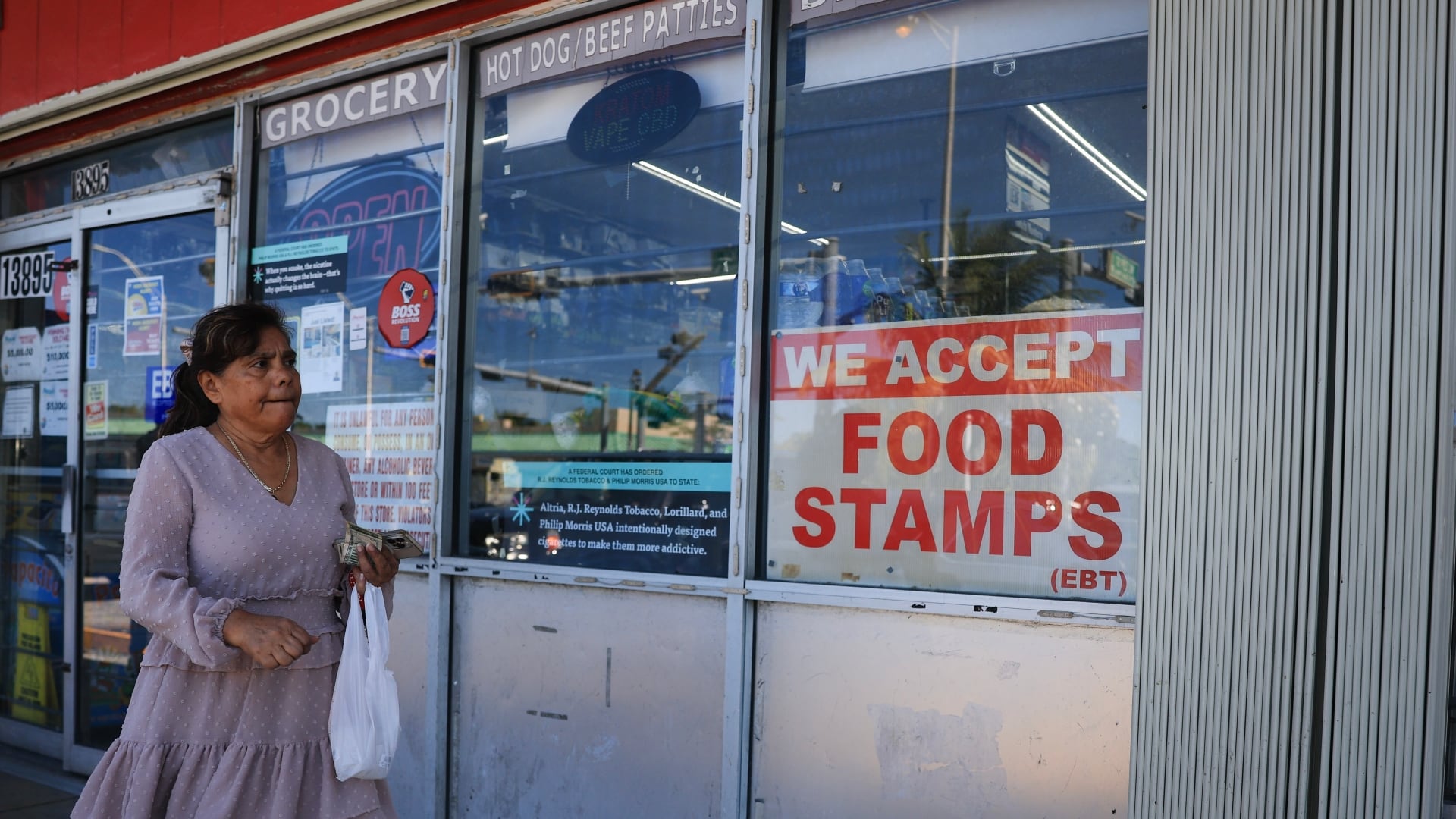
The number of people potentially impacted is huge. According to the Census Bureau, in 2020 roughly 35% of U.S. households included someone receiving Social Security benefits, 36% received Medicaid benefits and more than 13% of the total population received food stamps.
A recent poll by The Associated Press-NORC Center for Public Affairs Research found that 66% of Americans said they’re very or extremely concerned about the impact on the U.S. economy if the debt limit is not raised and the government defaults, though only 21% said they’re following the debate closely.
Robert Gault, 63, who depends on a $1,900 monthly Social Security disability payment, says an economic default “would make life so real awfully hard on me.” The former longtime factory worker said he suffers from chronic back pain caused by degenerating disks in his spine.
Gault, who lives in Bradford, Pennsylvania, near that state's border with New York, said he thinks about the debate — and the stalemate — in Washington a lot.
He hasn't made any drastic changes to the way he lives, but said, “I'm more conscientious of everything and I think about everything I do now.”
Negotiations between the president and congressional leaders are down to the wire as they try to break an impasse. GOP lawmakers have been pressing for spending cuts in exchange for agreeing to increase the government's borrowing authority and President Joe Biden wanted a “clean” debt ceiling increase without conditions.
Without a deal, the U.S. could default as soon as June 1, according to Yellen.
House Speaker Kevin McCarthy, R-Calif., was asked Monday if people should start preparing for default, and insisted “no, no, no, no.”
But people on fixed incomes and organizations that serve the poor — already feeling the after-effects of the pandemic and dealing with inflation — are bracing for a potential debt default that would deal an overwhelming blow to their finances.
Clare Higgins, executive director of Community Action Pioneer Valley in Massachusetts, said demand at the organization's food banks has skyrocketed since the start of the pandemic, and is growing again.
With a possible debt default, she said, she's seeing more demand for food from the three pantries that the organization either runs or financially supports.
"Yes, demand has gone up — but it was already up before," she said.
“We're already behind the eight-ball in what we're able to pay teachers,” she said of the organization's head start and early learning programs. “And the inflation that has happened in the economy has already reduced our ability to stretch the dollar.”
Higgins said while she's hopeful that Biden and McCarthy can reach a compromise, she's concerned the deal will include Republican-sought budget cuts that would affect the organizations she manages. And if a default does happen, Higgins said, “I hope it's for a short period.”
William Howell, a political science professor at the University of Chicago Harris School of Public Policy, said the notion of older people and recipients of government benefits doomsday prepping for disruptions every time budget season comes around is symptomatic of a “dysfunctional” democracy.
“It’s not how a healthy democracy handles its business,” he said, adding that the consequences of the brinksmanship will impact the government's ability to function and plan in coming years.
“In this era of hyper-polarization, the way you get compromise is walking right up to the edge of economic catastrophe and threatening default — on the other side we have a president almost threatening to invoke the 14th Amendment to do away with the debt ceiling," he said. “This is the stuff of partisan politics."
Adriene Clifford, 58, knows about balance sheets because she is an accounting professor in New York state. The Delhi resident said she was concerned enough about possible disruptions to the banking system in the event of a default that she withdrew money from the bank “just to tie me over.”
“I've been most concerned about the banking system going down and the FDIC not being there,” Clifford said. She was referring to the Federal Deposit Insurance Corp., the independent federal agency that exists to maintain stability and public confidence in the U.S. financial system.
At the Kids' Stop Learning Center in Rome, Georgia, Lance Elam, owner of the family business that has been in operation since 1984, says he’s not worried that a default will actually occur. But he still has done the calculation on how long operations could last without the subsidies that the organization receives for its three locations in Rome and Cartersville, Georgia.
“We have enough liquid funds to carry on for six to eight months,” he said, adding that state and federal funds helped the Kids' Stop Learning Center stay in business through the pandemic.
“We have so many kids on our waiting list,” he said, that the center would likely begin dropping kids who couldn't pay without subsidies and prioritize families that can pay out of pocket.