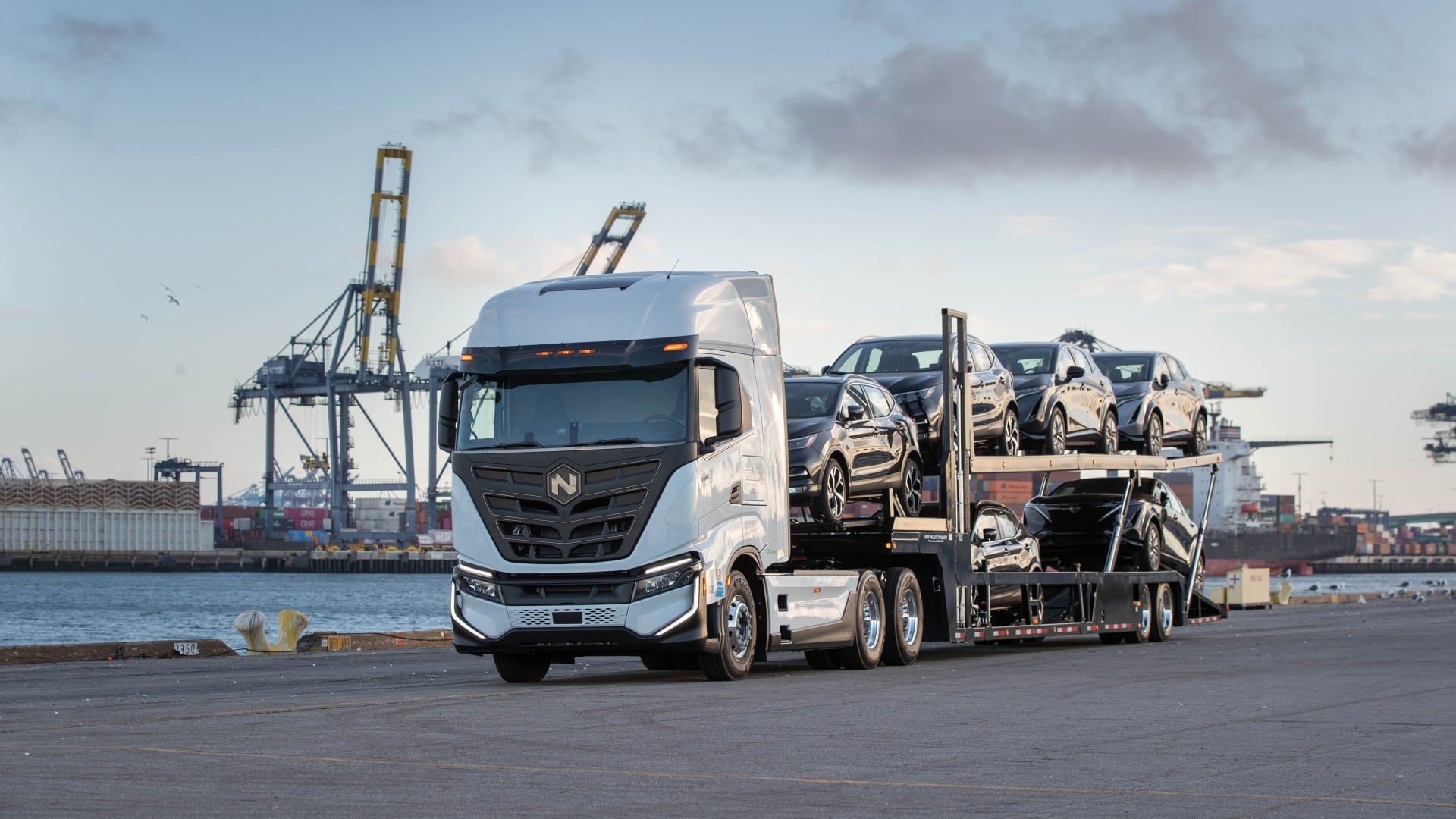
Nissan has added two battery electric powered (BEV) trucks to a crucial link in its supply chains. The heavy-duty Class 8 trucks, manufactured by Nikola and Kenworth, will pick up new vehicles from the Port of Los Angeles and deliver them to dealerships across the Los Angeles region.
“Exploring the use of BEV trucks for new vehicle delivery is an important milestone in our journey toward carbon neutrality throughout our business,” said Chris Styles, the vice president of supply chain management for Nissan North America.
"Appropriately," the company said, the BEV car-haulers' first delivery will include a shipment of Nissan's new, all-electric crossover, the 2023 Ariya.
The project is designed to help Nissan understand the challenges of using all-electric trucks for car-hauling. After the trial, the company plans to deploy additional BEV trucks in the region, with the goal of eventually using them for a variety of supply chain needs.
Nissan said it is one of the first automakers to use BEV for vehicle transportation, and that the effort fits into the company's longer-term goal of making electric cars 40 percent of U.S. sales by 2030 and achieve carbon neutrality across its operations by 2050.
“By being an early adopter of this technology, we’re showcasing our innovative spirit and positioning ourselves to meet our long-term goals for zero-tailpipe-emission transportation," said Styles.
Complex President Moksha Fitzgibbons explains how the brand is blending media, AI, e-commerce, sports & live experiences to build a new kind of culture business
Amazon’s Daniel Rausch, VP of Alexa and Echo, on Alexa’s AI evolution, the future of voice commerce and why your next shopping assistant could be Alexa.
PlantSwitch CEO Dillon Baxter reveals how agricultural byproducts like rice hulls and wheat straw could help replace plastics with plant-based alternatives.
Nugget ice is booming across America. Middleby CEO Tim FitzGerald explains the craze, restaurant demand and why the trend could become a major growth engine.