By Jessica Gresko
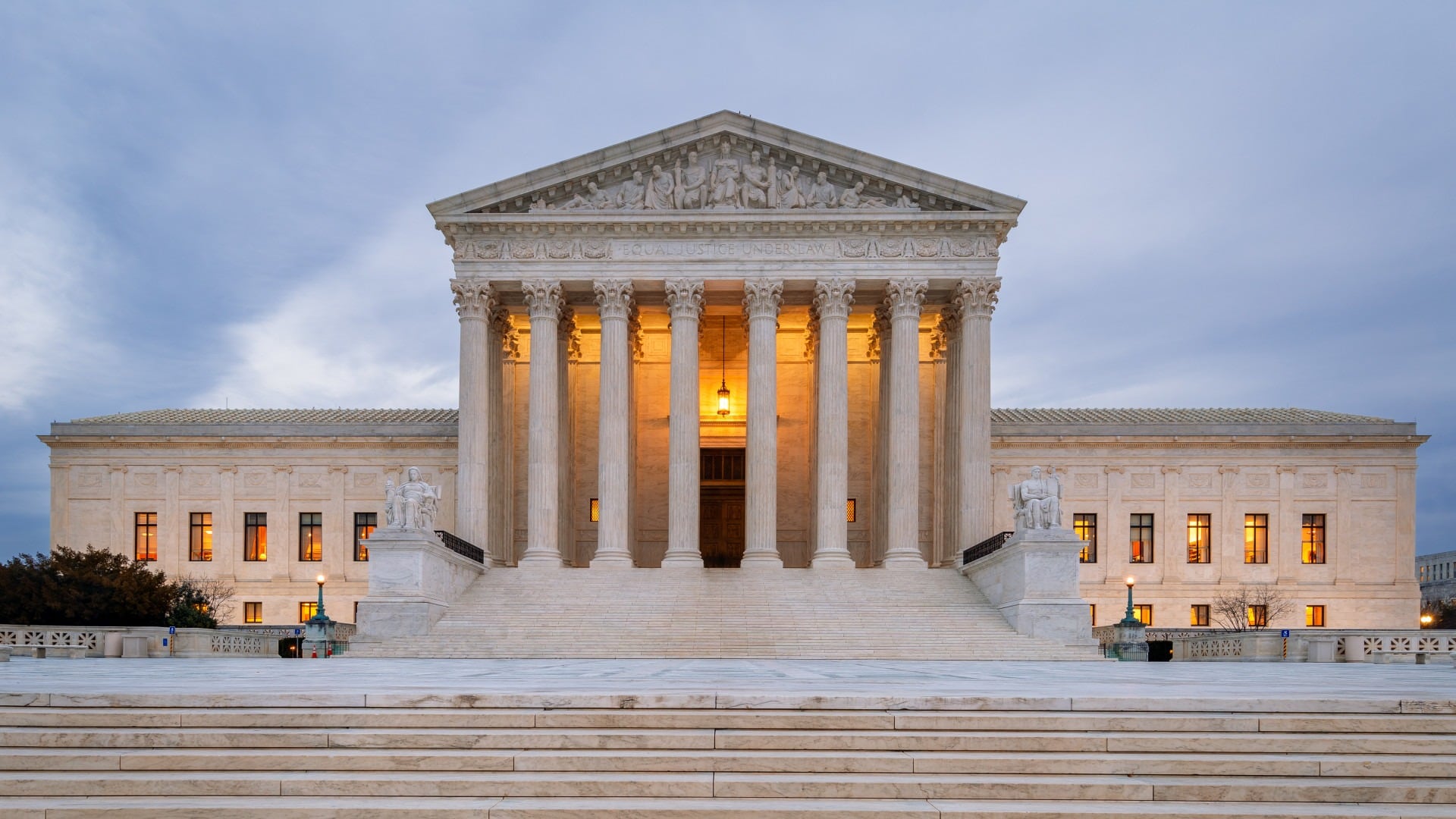
The Supreme Court said Monday it will take up a Republican-led challenge to the Consumer Financial Protection Bureau, a case that could threaten how the consumer watchdog agency functions. It is the second time in three years that the justices will be examining the federal agency, which was created in the wake of the 2008 financial crisis.
The case will not be heard before October. That's when the court begins its next term.
Late last year, a federal appeals court — the U.S. Court of Appeals for the 5th Circuit — ruled that the agency’s funding structure is unconstitutional, threatening its ability to function. The Biden administration asked the high court to review that decision, which it has now agreed to do.
The administration said the lower court’s ruling “calls into question virtually every action the CFPB has taken” since its creation. The decision “threatens to inflict immense legal and practical harms on the CFPB, consumers, and the nation’s financial sector,” the administration said.
Since the bureau was created more than a decade ago by the Dodd-Frank Act, it has varied in its aggressiveness. During the Obama administration, it used its muscle to collect fines from banks and credit card companies; during the Trump administration, it drastically scaled back enforcement actions. Republicans have argued that the agency has unchecked power.
The case the justices agreed to hear centers on the agency's funding. Unlike a majority of agencies, the CFPB does not get its funding from the annual budget process in Congress. Instead, it is funded directly by the Federal Reserve. The agency’s budget is capped at 12% of the total operating expenses of the Federal Reserve System. In the 2022 fiscal year, the agency received about $640 million.
The case the justices will hear began when two associations sued over the agency's Payday Lending Rule. They argued in part that the agency's funding structure violated the Constitution, improperly insulating the agency from congressional supervision. A trial court ruled against the associations, but the appeals court agreed the funding structure was unconstitutional. Other courts that had previously looked at the agency's funding structure found no issue.
In urging the justices to take the case, a group of 16 mostly Republican-led states called the CFPB “a failed experiment in administrative governance.”
Just three years ago, in 2020, the high court dealt with a different challenge to the agency. That case involved the agency's structure. The justices ultimately ruled that Congress had improperly insulated the head of the bureau from removal. The justices said the agency could continue to operate but that its director had to be removable by the president at will.
The CFPB was the brainchild of Sen. Elizabeth Warren of Massachusetts and former Democratic presidential candidate.

The Supreme Court is allowing Lisa Cook to remain as a Federal Reserve governor for now.
Rep. John Moolenaar has requested an urgent briefing from the White House after Trump supported a deal giving Americans a majority stake in TikTok.
A new report finds the Department of Government Efficiency’s remaking of the federal workforce has battered the Washington job market and put more households in the metropolitan area in financial distress.
A new poll finds U.S. adults are more likely than they were a year ago to think immigrants in the country legally benefit the economy. That comes as President Donald Trump's administration imposes new restrictions targeting legal pathways into the country. The Associated Press-NORC Center for Public Affairs Research survey finds Americans are more likely than they were in March 2024 to say it’s a “major benefit” that people who come to the U.S. legally contribute to the economy and help American companies get the expertise of skilled workers. At the same time, perceptions of illegal immigration haven’t shifted meaningfully. Americans still see fewer benefits from people who come to the U.S. illegally.
Shares of Tylenol maker Kenvue are bouncing back sharply before the opening bell a day after President Donald Trump promoted unproven and in some cases discredited ties between Tylenol, vaccines and autism. Trump told pregnant women not to use the painkiller around a dozen times during the White House news conference Monday. The drugmaker tumbled 7.5%. Shares have regained most of those losses early Tuesday in premarket trading.
Federal Reserve Chair Jerome Powell on Tuesday signaled a cautious approach to future interest rate cuts, in sharp contrast with other Fed officials who have called for a more urgent approach. In remarks in Providence, Rhode Island, Powell noted that there are risks to both of the Fed’s goals of seeking maximum employment and stable prices. His approach is in sharp contrast to some members of the Fed’s rate-setting committee who are pushing for faster cuts.
President Donald Trump’s efforts to reshape the American media landscape have led to the suspension of late-night comedian Jimmy Kimmel.
Ben & Jerry’s co-founder Jerry Greenfield is leaving the ice cream brand after 47 years. He says the freedom the company used to have to speak up on social issues has been stifled
The Federal Reserve cut its key interest rate by a quarter-point Wednesday and projected it would do so twice more this year as concern grows at the central bank about the health of the nation’s labor market. The move is the Fed’s first cut since December and lowered its short-term rate to about 4.1%, down from 4.3%. Fed officials, led by Chair Jerome Powell, had kept their rate unchanged this year as they evaluated the impact of tariffs, tighter immigration enforcement, and other Trump administration policies on inflation and the economy. The only dissenter was Stephen Miran, the recent Trump-appointee.
After a late-night vote and last-minute ruling, the Federal Reserve began a key meeting on interest rate policy Tuesday with both a new Trump administration appointee and an official the White House has targeted for removal.
Load More