NEW YORK (AP) — President Donald Trump’s administration has given New York until next month to comply with its order to halt Manhattan’s new congestion pricing system, but state officials on Wednesday vowed to continue the tolling program, which is meant to thin traffic and pump new revenue into the nation’s busiest transit system.

The Federal Highway Administration said the $9 toll on most vehicles entering Manhattan neighborhoods south of Central Park must end by March 21, according to a letter provided to The Associated Press by the U.S. Department of Transportation on Wednesday.

The letter was sent to New York officials on Feb. 20, the day after Transportation Secretary Sean Duffy announced he'd rescinded federal approval of the toll, calling it a "slap in the face to working class Americans and small business owners.”

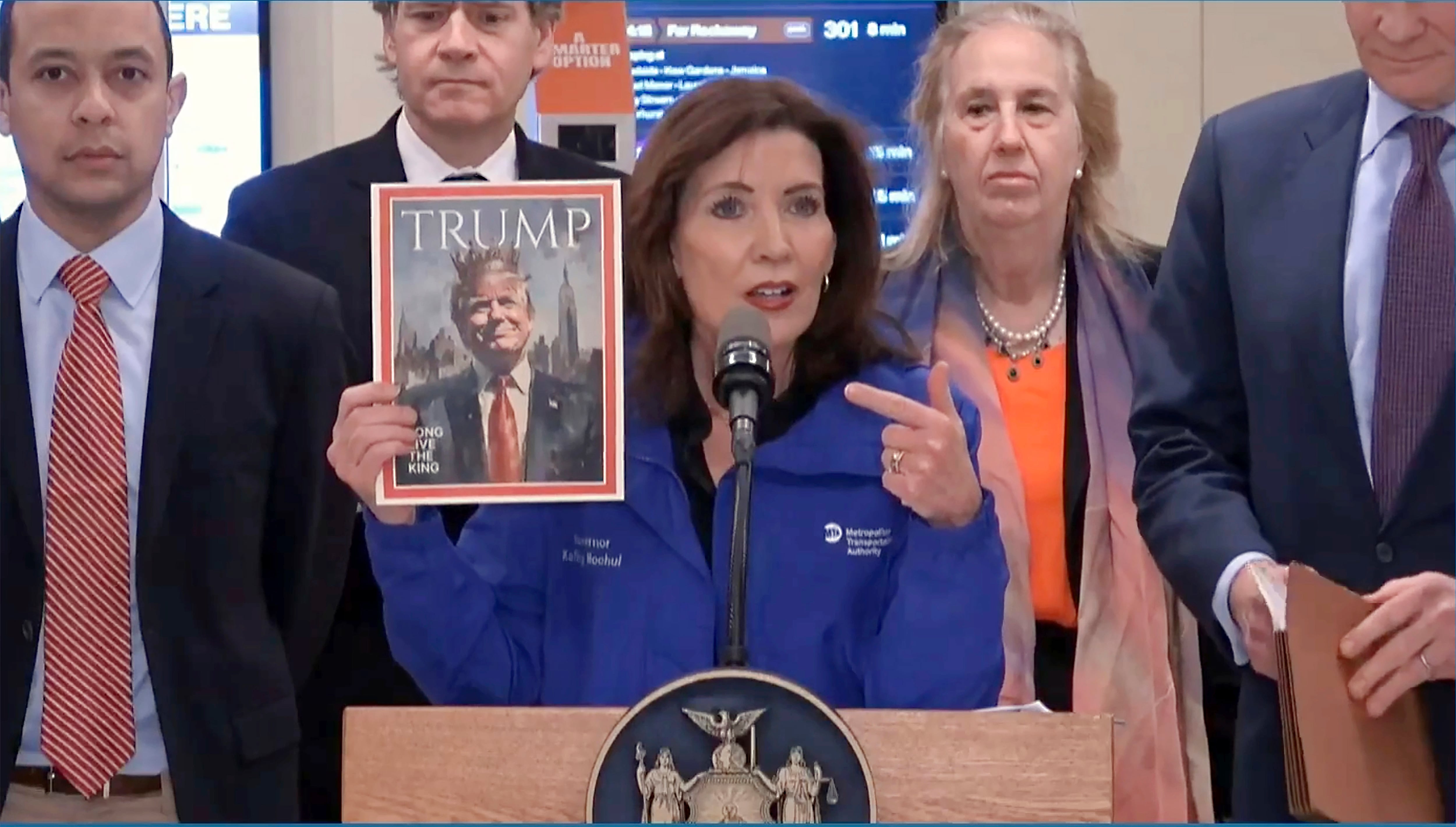
Gov. Kathy Hochul on Wednesday promised an “orderly resistance” to the federal decree, which called for an “orderly termination” to congestion pricing. Similar toll programs have long existed in other cities, including London, Stockholm, Milan and Singapore, but have never been tried before in the U.S.

“We will not be steamrolled here in New York,” the Democratic governor vowed at a board meeting of the Metropolitan Transportation Authority, the state agency that’s overseeing the new toll. “We're in this fight together, and I’m in this as long as it takes.”

Hochul met privately with Trump at the White House on Friday, presenting him a booklet her press secretary, Avi Small, said showed the early success of congestion pricing.

The MTA has filed suit in Manhattan federal court, arguing the Trump administration lacks legal authority to revoke approval for the program, which was granted under Democratic President Joe Biden’s administration.

“The federal government cannot unilaterally terminate the program,” Janno Lieber, chair and CEO of the MTA, said on an appearance on NY1 last week. “Once it’s begun, there’s all kinds of case law in federal courts about the procedures that the federal government has to use to take away an approval to reverse a decision. None of this complies with that, and that’s why we are so comfortable that this is a strong case, and we’re going to win.”

Lieber argued Wednesday that the tolling plan, which launched on Jan. 5, is working as intended.

He said there are 60,000 fewer vehicles a day driving into the tolling zone — a 10% reduction — while travel times are noticeably faster on tunnels and bridges into Manhattan as well as its busy cross streets.

Pedestrian traffic is up around 4% and economic activity appears to be up, with Broadway theater attendance, restaurant reservations and retail sales in the tolling zone seeing increases over a similar period in 2024, Lieber said.

He said the MTA is on track to generate roughly $500 million from the toll program by the end of the year, allowing it to move forward with planned subway, bus and transit improvements. The MTA earned nearly $50 million in roughly the first month of the toll's operation, according to a report the agency released Monday.

“We’re not going back, no matter what the rhetoric from other parts of the East Coast is," Lieber said. “We tried gridlock for 50 years, and it was bad for our economy, it was bad for our health and it was bad for New Yorkers' quality of life.”

__

Associated Press writer Anthony Izaguirre in Albany contributed to this story.
Share:
More In Politics
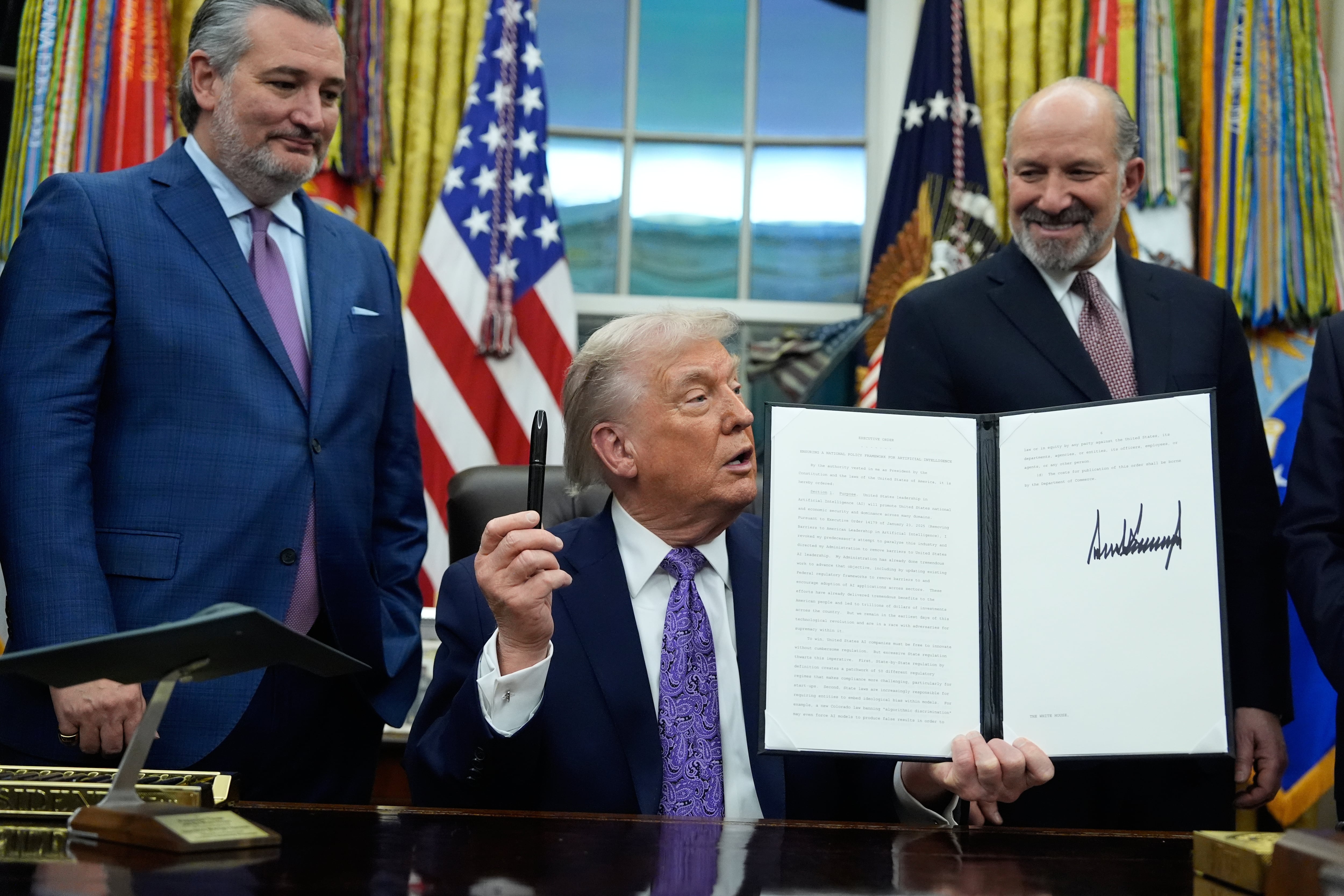
Trump signs executive order to block state AI regulations
President Donald Trump has signed an executive order to block states from regulating artificial intelligence. He argues that heavy regulations could stifle the industry, especially given competition from China. Trump says the U.S. needs a unified approach to AI regulation to avoid complications from state-by-state rules. The order directs the administration to draw up a list of problematic regulations for the Attorney General to challenge. States with laws could lose access to broadband funding, according to the text of the order. Some states have already passed AI laws focusing on transparency and limiting data collection.
New York Times, after Trump post, says it won’t be deterred from writing about his health
The New York Times and President Donald Trump are fighting again. The news outlet said Wednesday it won't be deterred by Trump's “false and inflammatory language” from writing about the 79-year-old president's health. The Times has done a handful of stories on that topic recently, including an opinion column that said Trump is “starting to give President Joe Biden vibes.” In a Truth Social post, Trump said it might be treasonous for outlets like the Times to do “FAKE” reports about his health and "we should do something about it.” The Republican president already has a pending lawsuit against the newspaper for its past reports on his finances.
Trump approves sale of more advanced Nvidia computer chips used in AI to China
President Donald Trump says he will allow Nvidia to sell its H200 computer chip used in the development of artificial intelligence to “approved customers” in China. Trump said Monday on his social media site that he had informed China’s leader Xi Jinping and “President Xi responded positively!” There had been concerns about allowing advanced computer chips into China as it could help them to compete against the U.S. in building out AI capabilities. But there has also been a desire to develop the AI ecosystem with American companies such as chipmaker Nvidia.
Swing district Republicans brace for political fallout if health care subsidies expire
House Republicans in key battleground districts are working to contain the political fallout expected when thousands of their constituents face higher bills for health insurance coverage obtained through the Affordable Care Act. For a critical sliver of the GOP majority, the impending expiration of the enhanced premium tax credits after Dec. 31 could be a major political liability as they potentially face midterm headwinds in a 2026 election critical to President Donald Trump’s agenda. For Democrats, the party’s strategy for capturing the House majority revolves around pinning higher bills for groceries, health insurance and utilities on Republicans.
Trump says Netflix deal to buy Warner Bros. ‘could be a problem’ because of size of market share
President Donald Trump says a deal struck by Netflix last week to buy Warner Bros. Discovery “could be a problem” because of the size of the combined market share. The Republican president says he will be involved in the decision about whether federal regulators should approve the deal. Trump commented Sunday when he was asked about the deal as he walked the red carpet at the Kennedy Center Honors. The $72 billion deal would bring together two of the biggest players in television and film and potentially reshape the entertainment industry.
Load More