By Jonathan Lemire, Zeke Miller, and Alan Suderman

Updated 12:36 pm ET

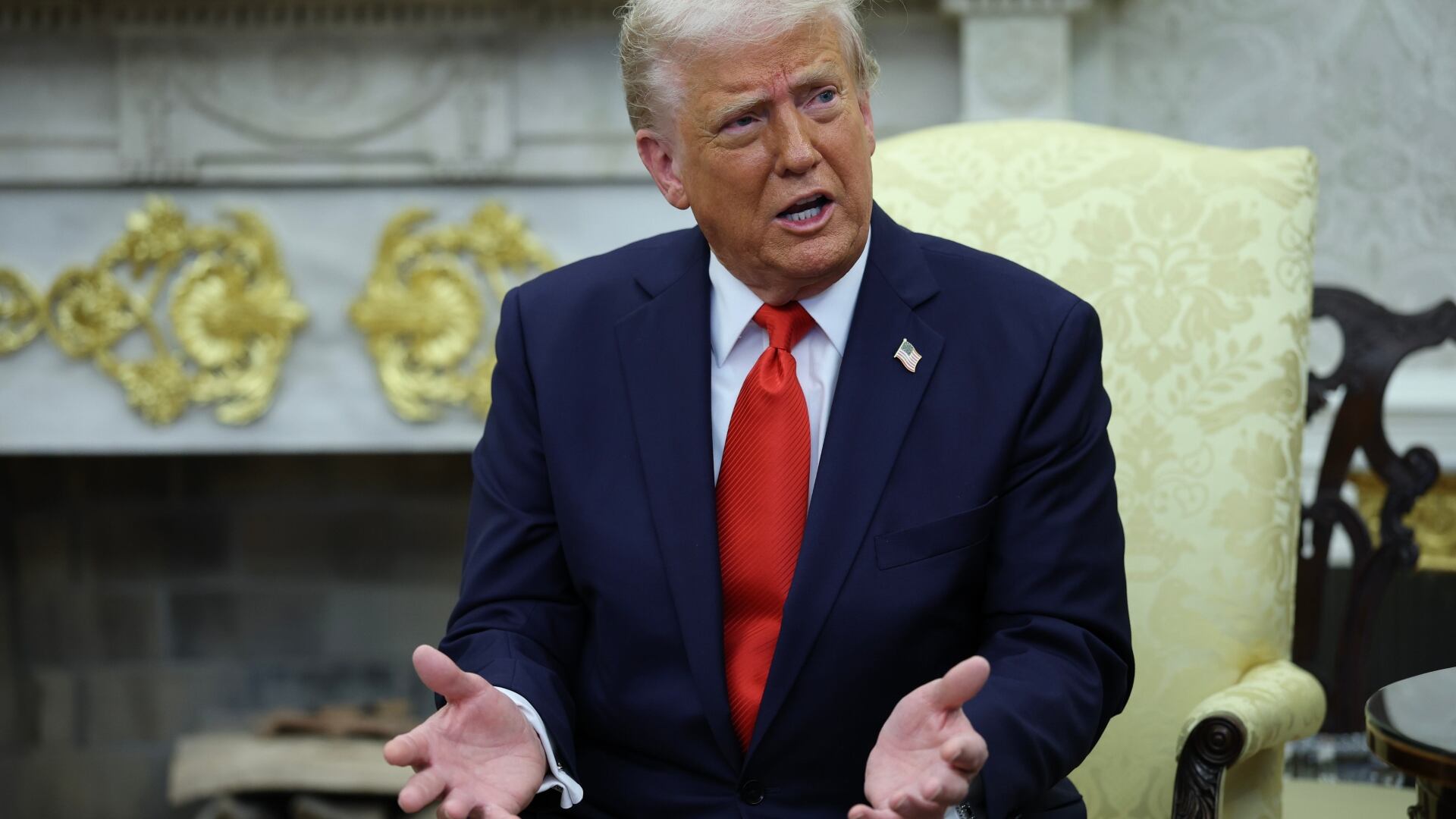
President Donald Trump on Monday derided many governors as “weak” and demanded tougher crackdowns on burning and stealing among some demonstrations in the aftermath of another night of violent protests in dozens of American cities.

Trump spoke to governors on a video teleconference that also included law enforcement and national security officials, telling the state leaders they “have to get much tougher."

“Most of you are weak,” Trump said. “You have to arrest people.”

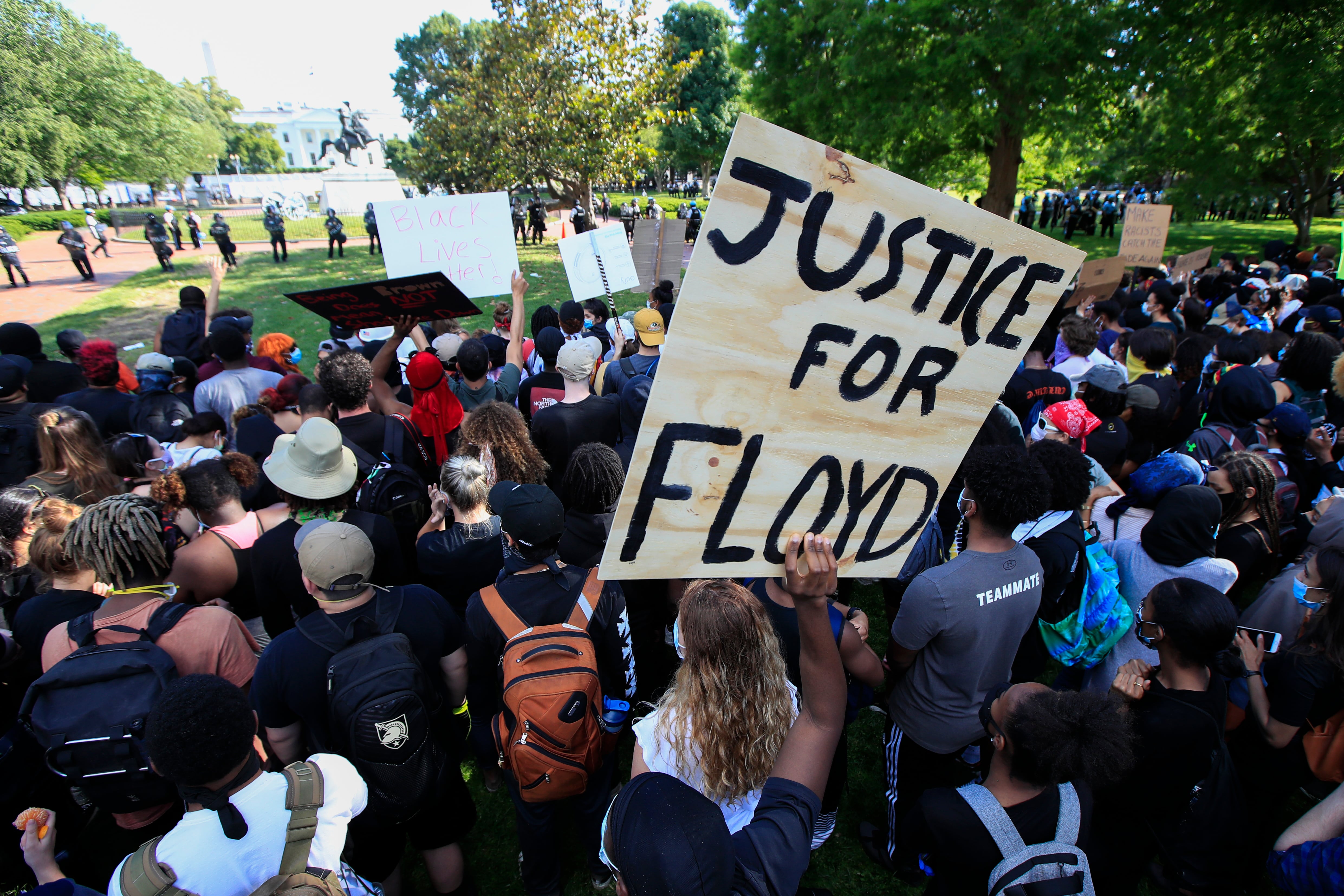
The days of protests were triggered by the death of George Floyd, a black man who died when a white Minneapolis police officer knelt on his neck for several minutes. The demonstrations turned violent in several cities, with looting and mayhem, and fires ignited in historic park Lafayette Park across from the White House.

The president urged the governors to deploy the National Guard, which he credited for helping calm the situation Sunday night in Minneapolis. He demanded that similarly tough measures be taken in cities that also experienced a spasm of violence, including New York, Philadelphia and Los Angeles.

“You’ve got to arrest people, you have to track people, you have to put them in jail for 10 years and you’ll never see this stuff again,” said Trump. “We’re doing it in Washington, D.C. We’re going to do something that people haven’t seen before."

The president told the governors they were making themselves “look like fools” for not calling up more of the National Guard as a show for force on city streets.

Attorney General Bill Barr, who was also on the call, told governors that a joint terrorist task force would be used to track agitators and urged local officials to “dominate” the streets and control, not react to crowds, and urged them to “go after troublemakers.”

Trump's angry exhortations at the nation's governors came after a night of escalating violence, images of fires and looting and clashes with police filling the nation's airwaves and overshadowing the largely peaceful protests. The protests grew so heated Friday night that the Secret Service rushed the president to an underground bunker previously used during terrorist attacks.

On Monday, Trump also spoke of trying to criminalize flag-burning. The Supreme Court has conservative new members since it last ruled on that issue, and Trump said that “I think it's time to review that again.”

He continued his effort to project strength, using a series of inflammatory tweets and delivering partisan attacks during a time of national crisis.

As cities burned night after night and images of violence dominated television coverage, Trump’s advisers discussed the prospect of an Oval Office address in an attempt to ease tensions. The notion was quickly scrapped for lack of policy proposals and the president’s own seeming disinterest in delivering a message of unity.

Trump did not appear in public on Sunday and was not scheduled to on Monday either.

The demonstrations in Washington appeared to catch officers by surprise. They sparked one of the highest alerts at the White House complex since the Sept. 11 attacks in 2001.

Secret Service protocol would call for all those under the agency’s protection to be in the underground shelter.

Trump has told advisers he worries about his safety, while both privately and publicly praising the work of the Secret Service.

Demonstrators returned Sunday afternoon, facing off against police at Lafayette Park into the evening. Trump retweeted a message from a conservative commentator encouraging authorities to respond with greater force.

“This isn’t going to stop until the good guys are willing to use overwhelming force against the bad guys,” Buck Sexton wrote in a message amplified by the president.

In recent days security at the White House has been reinforced by the National Guard and additional personnel from the Secret Service and the U.S. Park Police.

The Justice Department deployed members of the U.S. Marshals Service and agents from the Drug Enforcement Administration to supplement National Guard troops outside the White House, according to a senior Justice Department official. The official could not discuss the matter publicly and spoke on the condition of anonymity.

___

Lemire reported from New York. Associated Press writer Michael Balsamo contributed to this report.

Share:
More In Politics
US tariffs are having an uneven effect on holiday prices and purchases
Many U.S. consumers say they’ve noticed higher than usual prices for holiday gifts in recent months, according to a a December poll from The Associated Press-NORC Center for Public Affairs Research. A contributing factor is the unusually high import taxes the Trump administration put on foreign goods. While the worst-case consumer impact that many economists foresaw from the administration’s trade policies hasn’t materialized, some popular gift items have been affected more than others. Most toys and electronics sold in the U.S. come from China. So do most holiday decorations. Jewelry prices have risen due to the cost of gold.
Serbia organized crime prosecutors charge minister, others in connection with Kushner-linked project
Serbia’s prosecutor for organized crime has charged a government minister and three others with abuse of position and falsifying of documents related to a luxury real estate project linked to U.S. President Donald Trump’s son-in-law Jared Kushner. The charges came on Monday. The investigation centers on a controversy over a a bombed-out military complex in central Belgrade that was a protected cultural heritage zone but that is facing redevelopment as a luxury compound by a company linked to Kushner. The $500 million proposal to build a high-rise hotel, offices and shops at the site has met fierce opposition from experts at home and abroad. Selakovic and others allegedly illegally lifted the protection status for the site by falsifying documentation.
Trump signs executive order to block state AI regulations
President Donald Trump has signed an executive order to block states from regulating artificial intelligence. He argues that heavy regulations could stifle the industry, especially given competition from China. Trump says the U.S. needs a unified approach to AI regulation to avoid complications from state-by-state rules. The order directs the administration to draw up a list of problematic regulations for the Attorney General to challenge. States with laws could lose access to broadband funding, according to the text of the order. Some states have already passed AI laws focusing on transparency and limiting data collection.
New York Times, after Trump post, says it won’t be deterred from writing about his health
The New York Times and President Donald Trump are fighting again. The news outlet said Wednesday it won't be deterred by Trump's “false and inflammatory language” from writing about the 79-year-old president's health. The Times has done a handful of stories on that topic recently, including an opinion column that said Trump is “starting to give President Joe Biden vibes.” In a Truth Social post, Trump said it might be treasonous for outlets like the Times to do “FAKE” reports about his health and "we should do something about it.” The Republican president already has a pending lawsuit against the newspaper for its past reports on his finances.
Trump approves sale of more advanced Nvidia computer chips used in AI to China
President Donald Trump says he will allow Nvidia to sell its H200 computer chip used in the development of artificial intelligence to “approved customers” in China. Trump said Monday on his social media site that he had informed China’s leader Xi Jinping and “President Xi responded positively!” There had been concerns about allowing advanced computer chips into China as it could help them to compete against the U.S. in building out AI capabilities. But there has also been a desire to develop the AI ecosystem with American companies such as chipmaker Nvidia.
Swing district Republicans brace for political fallout if health care subsidies expire
House Republicans in key battleground districts are working to contain the political fallout expected when thousands of their constituents face higher bills for health insurance coverage obtained through the Affordable Care Act. For a critical sliver of the GOP majority, the impending expiration of the enhanced premium tax credits after Dec. 31 could be a major political liability as they potentially face midterm headwinds in a 2026 election critical to President Donald Trump’s agenda. For Democrats, the party’s strategy for capturing the House majority revolves around pinning higher bills for groceries, health insurance and utilities on Republicans.
Load More