By Matthew Lee
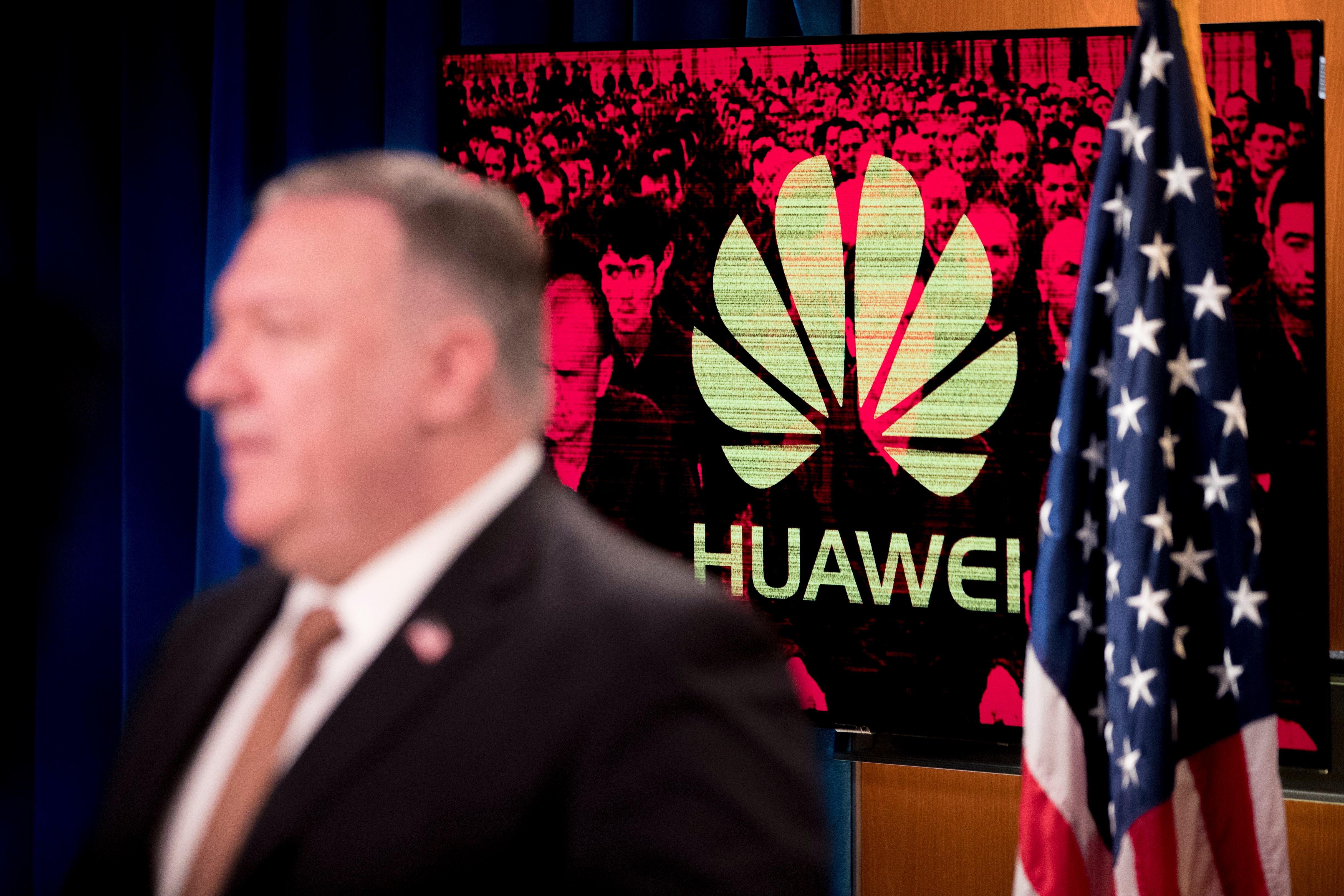
The Trump administration said Wednesday it will impose travel bans on employees of the Chinese technology giant Huawei and other Chinese companies the U.S. determines are assisting authoritarian governments in cracking down on human rights, including in China's western Xinjiang province.
Secretary of State Mike Pompeo also said the administration is finalizing plans to minimize data theft from the popular Chinese video streaming app TikTok, although he stopped short of saying it would be banned outright.
Pompeo made the announcements a day after the British government said it would ban Huawei from its 5G networks over concerns that sensitive data could be compromised by the Chinese Communist Party.
Pompeo told reporters at a State Department news conference that Huawei employees found to be providing "material support to regimes engaging in human rights violations and abuses globally" would be hit with sanctions.
"Companies impacted by today's action include Huawei, an arm of the CCP's surveillance state that censors political dissidents and enables mass internment camps in Xinjiang and the indentured servitude of its population shipped all over China," he said. "Certain Huawei employees provide material support to the CCP regime that commits human rights abuses.
"Telecommunications companies around the world should consider themselves on notice: If they are doing business with Huawei, they are doing business with human rights abusers," Pompeo said.
At a later event sponsored by The Hill newspaper, Pompeo said the administration was also looking at how to prevent data theft from TikTok and other Chinese companies.
"Whether it's TikTok or any of the other Chinese communications platforms, apps, infrastructure, this administration has taken seriously the requirement to protect the American people from having their information end up in the hands of the Chinese Communist Party," he said. "And so we are working through a process where all the relevant agencies and the private sector are getting to say their piece. We hope to have a set of decisions shortly which will reflect this central understanding."
It is not clear how many Huawei employees would be affected. Huawei says on its website that it has more than 194,000 employees in more than 170 countries and regions.
The U.S. has led a worldwide campaign to convince foreign governments, particularly those in allied nations, to bar Huawei from their advanced telecommunications networks, arguing that allowing them into those systems would lead to violations of their citizens' privacy.
The U.S. has also threatened NATO and other allies with curtailments or suspensions in intelligence sharing and cooperation should they allow Huawei components or technology in their high-speed networks.