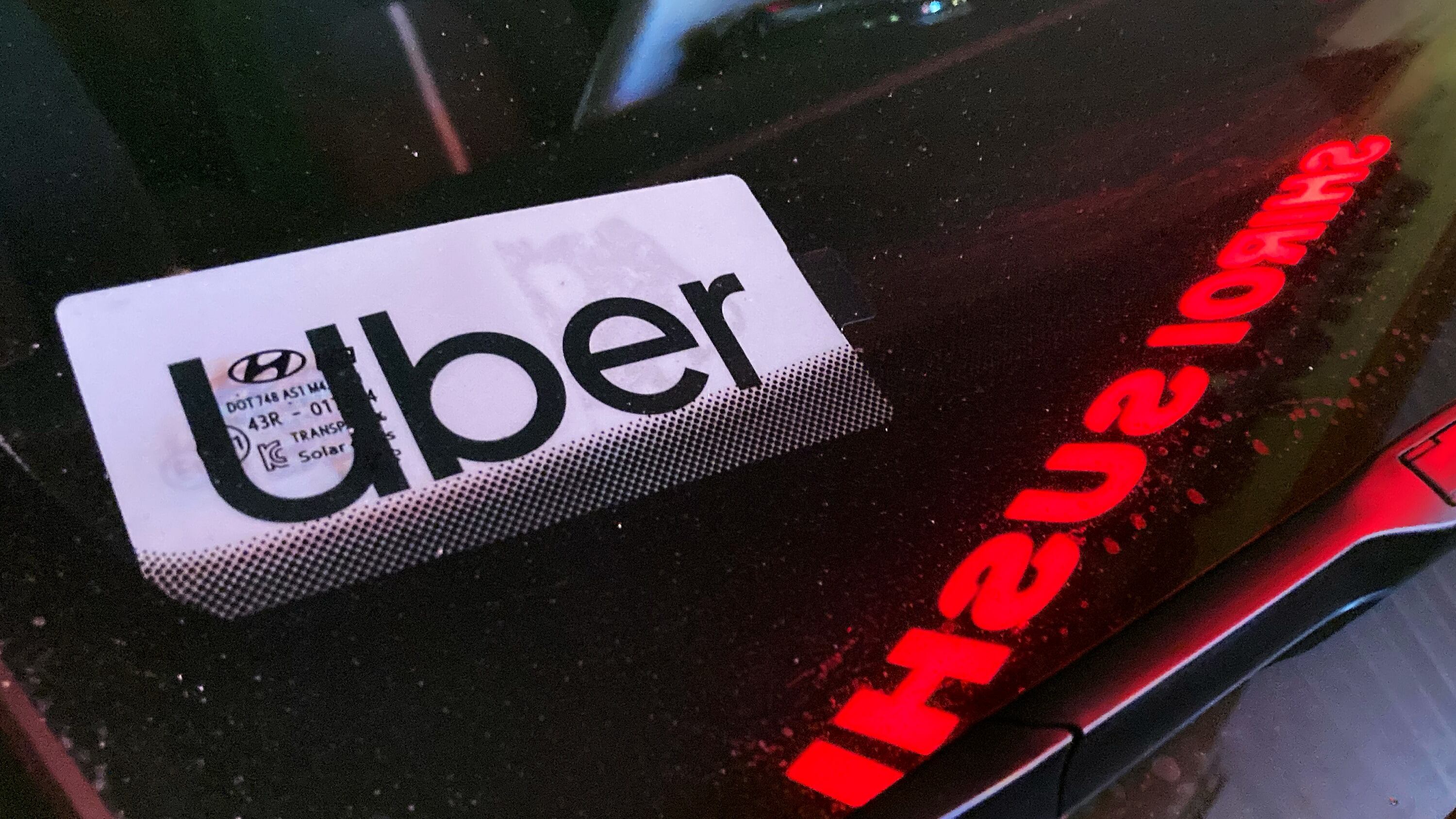
An Uber sign is displayed inside a car in Glenview, Ill., on Dec. 17, 2022. Ride-hailing companies Uber and Lyft will pay a combined $328 million to settle wage theft claims in New York, Attorney General Letitia James announced Thursday. (AP Photo/Nam Y. Huh, File)
Ride-hailing companies Uber and Lyft will pay a combined $328 million to settle wage theft claims in New York, Attorney General Letitia James announced Thursday.
James said the settlements resolve investigations into the companies improperly charging drivers sales taxes and other fees when the costs should have been paid by customers.
Uber will pay $290 million and Lyft will pay $38 million. The money will be distributed to current and former drivers, she said. The companies have also agreed to provide drivers outside of New York City with paid sick leave and give drivers outside of New York City a minimum wage of $26 per hour.
“For years, Uber and Lyft systemically cheated their drivers out of hundreds of millions of dollars in pay and benefits while they worked long hours in challenging conditions," James said in a statement.
Tony West, chief legal officer for Uber, said the agreement “helps put to rest the classification issue in New York and moves us forward with a model that reflects the way people are increasingly choosing to work.”
Lyft's chief policy officer, Jeremy Bird, said in a statement, “This is a win for drivers, and one we are proud to have achieved with the New York Attorney General’s Office.”
Complex President Moksha Fitzgibbons explains how the brand is blending media, AI, e-commerce, sports & live experiences to build a new kind of culture business
Amazon’s Daniel Rausch, VP of Alexa and Echo, on Alexa’s AI evolution, the future of voice commerce and why your next shopping assistant could be Alexa.
PlantSwitch CEO Dillon Baxter reveals how agricultural byproducts like rice hulls and wheat straw could help replace plastics with plant-based alternatives.
Nugget ice is booming across America. Middleby CEO Tim FitzGerald explains the craze, restaurant demand and why the trend could become a major growth engine.