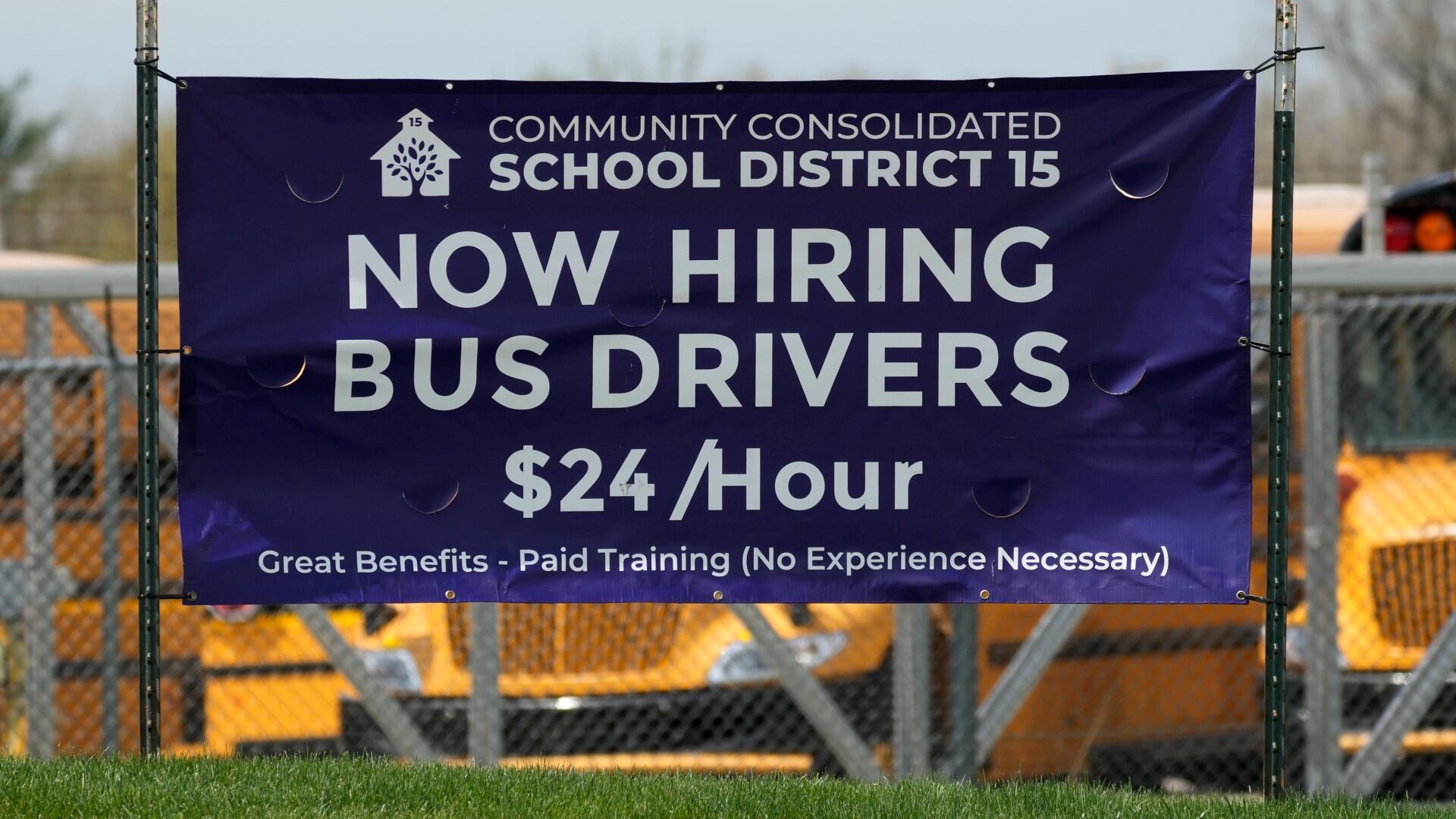
A hiring sign seeking bus drivers is posted in Palatine, Ill., Wednesday, April 19, 2023. On Tuesday, the Labor Department reports on job openings and labor turnover for March.(AP Photo/Nam Y. Huh)
By Paul Wiseman
U.S. job openings fell in March to the lowest level in nearly two years, a sign that the American labor market is cooling in the face of higher interest rates.
Employers posted 9.6 million vacancies in March, down from nearly 10 million in February and lowest since April 2021. The Labor Department's Job Openings and Labor Turnover Summary, out Tuesday, showed that layoffs rose to 1.8 million, the highest level since December 2020.
The number of Americans quitting their jobs — a sign they have confidence they can find better pay or working conditions elsewhere — dropped to 3.9 million, lowest since May 2021.
The American job market is strong but losing momentum. The Federal Reserve has raised its benchmark interest rate nine times in just over a year in a bid to rein in inflation that last year hit a four-decade high. And higher borrowing costs are taking an economic toll.
A hot job market can push up wages — and overall prices.
“Overall the JOLTS report shows a historically tight labor market that is finally starting to slacken more quickly, something Fed officials have been seeking for several quarters,''' Contingent Macro Advisors said in a research note.
The job market is cooling but remains strong by historic standards. Monthly job openings had never exceeded 10 million until 2021, then reeled off 20 straight months above that threshold. The streak ended in February.
The Labor Department on Friday releases the jobs report for last month. Forecasters surveyed by the data firm FactSet expect that employers added fewer than 182,000 jobs in April, which would be the third straight monthly drop since payrolls rose by a robust 472,000 in January.
The unemployment rate is expected to blip up to 3.6% in April, a couple of notches above January's half-century low 3.4%
U.S. sports betting is booming as NFL and college football fuel massive activity. BetMGM CEO Adam Greenblatt breaks down trends, growth, and what’s next.
President Donald Trump says a deal struck by Netflix last week to buy Warner Bros. Discovery “could be a problem” because of the size of the combined market share. The Republican president says he will be involved in the decision about whether federal regulators should approve the deal. Trump commented Sunday when he was asked about the deal as he walked the red carpet at the Kennedy Center Honors. The $72 billion deal would bring together two of the biggest players in television and film and potentially reshape the entertainment industry.
Disney's changes to a program for disabled visitors are facing challenges in federal court and through a shareholder proposal. The Disability Access Service program, which allows disabled visitors to skip long lines, was overhauled last year. Disney now mostly limits the program to those with developmental disabilities like autism who have difficulty waiting in lines. The changes have sparked criticism from some disability advocates. A shareholder proposal submitted by disability advocates calls for an independent review of Disney's disability policies. Disney plans to block this proposal, claiming it's misleading. It's the latest struggle by Disney to accommodate disabled visitors while stopping past abuses by some theme park guests.
With a merger this big, creators, studios, and theaters all face uncertain futures. Here’s what experts are worried about and what good could come from it.
With disengagement rising and hybrid work shifting, 'Everybody Matters' author Bob Chapman explains why treating people well could define the future of work.
We sat down with Ali Furman, U.S. Consumer Markets Industry Leader at consulting firm PwC to ask what trends she garnered from the initial data this year.